
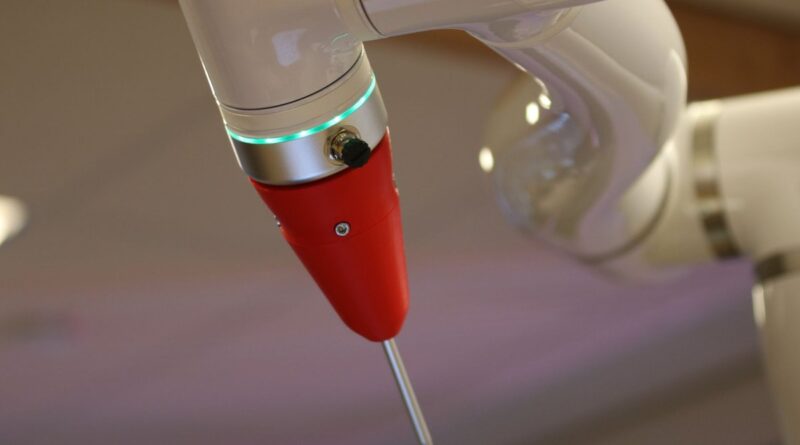
Emory & Georgia Tech Launch Dual-Degree in Medicine and Robotics

Hostinger Cloud Hosting: Ultra-Fast NVMe Storage & 99.9% Uptime Guarantee
Power your high-traffic WordPress websites with managed cloud infrastructure, automated daily backups, free SSL, and 24/7 expert support.
📌 Key Takeaways
- Emory University and Georgia Tech have launched a dual MD/MS in Robotics degree pathway to combine medical expertise with advanced robotic engineering.
- The program aims to address the critical need for professionals who can integrate sophisticated robotic solutions into healthcare practices and research.
- This interdisciplinary initiative is expected to accelerate innovation in areas like surgical robotics, diagnostics, and assistive technologies, improving patient outcomes.
- The collaboration signifies a forward-looking approach to education, preparing graduates for leadership roles in the evolving landscape of AI and medical technology.
Emory & Georgia Tech Launch Dual-Degree in Medicine and Robotics
In a significant move poised to redefine the future of healthcare technology, Emory University and the Georgia Institute of Technology have officially launched a pioneering dual-degree pathway in Medicine and Robotics. This interdisciplinary program, announced recently, aims to cultivate a new generation of professionals uniquely equipped to integrate advanced robotic solutions into medical practice and research.
The collaboration brings together two of the nation’s leading institutions: Emory’s renowned School of Medicine and Georgia Tech’s globally recognized College of Computing and College of Engineering. Students enrolling in this specialized track will pursue both a Doctor of Medicine (MD) degree from Emory and a Master of Science (MS) in Robotics from Georgia Tech. This strategic partnership addresses a critical gap in the workforce, preparing graduates to innovate at the intersection of complex medical challenges and sophisticated robotic engineering.
Key Insights: Bridging the Interdisciplinary Chasm
The establishment of this dual-degree pathway underscores a growing recognition within both academic and industry circles of the indispensable role robotics will play in modern medicine. Analysts suggest that the program’s unique structure will accelerate the development and adoption of robotic surgical systems, diagnostic tools, and assistive technologies. By immersing future physicians in the intricacies of robotic design and functionality, and conversely, by grounding robotics engineers in clinical realities, the initiative is designed to foster truly integrated solutions.
Industry observers note that the traditional silos between medical and engineering disciplines have often slowed the pace of innovation. This new program, however, provides a direct conduit for cross-pollination of ideas and expertise. Graduates will possess not only the clinical acumen to identify unmet medical needs but also the engineering prowess to conceptualize, develop, and implement robotic interventions, ensuring that technological advancements are clinically relevant and ethically sound. The curriculum is expected to cover areas from surgical robotics and prosthetics to AI-driven diagnostics and rehabilitation robotics, preparing students for leadership roles in both clinical and research settings.
Why This Matters in the Long Run
The Emory-Georgia Tech dual-degree pathway represents a forward-looking model for specialized education in the 21st century. As of October 2026, the convergence of artificial intelligence, advanced robotics, and personalized medicine continues to accelerate, demanding professionals with hybrid skill sets. This program directly addresses the need for individuals who can navigate the complexities of regulatory approval, patient safety, and ethical considerations inherent in deploying cutting-edge technology in healthcare. Its long-term impact is expected to be profound, shaping the trajectory of medical innovation, improving patient outcomes through precision intervention, and fostering a more efficient and technologically advanced healthcare ecosystem globally. Such initiatives are crucial for maintaining the competitive edge in medical technology development and application.
This strategic academic alliance is a testament to the evolving demands of a technologically driven world, preparing experts who will undoubtedly lead the next wave of medical breakthroughs.
📌 Key Questions Answered
What is the new dual-degree pathway offered by Emory and Georgia Tech?
Emory University and the Georgia Institute of Technology have launched a dual-degree pathway that combines a Doctor of Medicine (MD) from Emory with a Master of Science (MS) in Robotics from Georgia Tech.
What is the primary goal of this interdisciplinary program?
The program aims to train a new generation of professionals capable of integrating advanced robotic solutions into medical practice and research, bridging the gap between medical and engineering disciplines.
Which institutions are involved in this dual-degree initiative?
The program is a collaboration between Emory's School of Medicine and Georgia Tech's College of Computing and College of Engineering.
📚 Story Sources:
- New Emory and Georgia Tech Dual-Degree Pathway Bridges Medicine and Robotics | Newswise – Newswise (news.google.com)
Newswise reported on the establishment of a new dual-degree pathway between Emory and Georgia Tech, focusing on the bridging of medicine and robotics.
This article was synthesized by AI from the multiple sources above for educational and informational purposes.
Image Credit: Photo by Freek Wolsink on Pexels
Pingback: Emory-Georgia Tech Dual-Degree Pathway: A 2026 Retrospective on Med-Robotics Integration - The Pivot News