
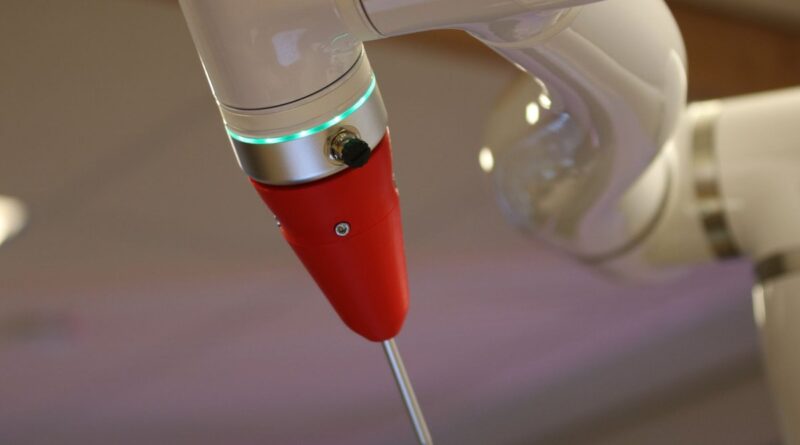
Emory-Georgia Tech Dual-Degree Pathway: A 2026 Retrospective on Med-Robotics Integration

Hostinger Cloud Hosting: Ultra-Fast NVMe Storage & 99.9% Uptime Guarantee
Power your high-traffic WordPress websites with managed cloud infrastructure, automated daily backups, free SSL, and 24/7 expert support.
📌 Key Takeaways
- Emory University and Georgia Tech established a dual-degree pathway bridging medicine and robotics.
- The program aims to train professionals with both deep clinical understanding and advanced robotic engineering skills.
- By 2026, this interdisciplinary approach is crucial for addressing the surging demand for talent in AI-powered healthcare and automation.
- The initiative serves as a model for future educational programs adapting to the evolving landscape of medical technology and patient care.
Bridging Disciplines: The Enduring Relevance of the Emory-Georgia Tech Med-Robotics Program
In a strategic move that anticipated the accelerating convergence of healthcare and advanced automation, Emory University and the Georgia Institute of Technology jointly established a dual-degree pathway focused on medicine and robotics. Announced some time ago, this groundbreaking program was designed to cultivate a new generation of professionals capable of navigating the complex intersection of surgical precision, diagnostic innovation, and robotic engineering. As of October 1, 2026, this initiative stands as a testament to the foresight required to address the evolving demands of modern medicine.
The collaborative pathway uniquely blends the robust medical curriculum of Emory with Georgia Tech’s renowned expertise in robotics and engineering. Its core objective is to produce graduates equipped with both deep clinical understanding and sophisticated technological skills, enabling them to design, implement, and optimize robotic systems for medical applications. This includes everything from advanced surgical robots and prosthetic devices to intelligent diagnostic tools and automated patient care systems, directly addressing a critical talent gap identified by industry and healthcare leaders.
Key Analysis: The Imperative for Interdisciplinary Talent in 2026
The establishment of such a program has proven particularly prescient given the rapid advancements in artificial intelligence and robotics witnessed by 2026. The demand for professionals who can fluent in both medical terminology and machine learning algorithms has surged, driven by innovations in areas like AI-powered surgical assistance, personalized medicine delivery through robotic platforms, and remote healthcare solutions. Industry observers note that the traditional silos between medical education and engineering are increasingly unsustainable, necessitating integrated curricula like the one offered by Emory and Georgia Tech.
This dual-degree model addresses not only the technical challenges but also the crucial ethical and societal implications inherent in deploying advanced robotics in sensitive healthcare environments. Graduates from such programs are uniquely positioned to contribute to the responsible development and integration of these technologies, ensuring patient safety, data privacy, and equitable access. As surgical robots become more autonomous and diagnostic AI systems more sophisticated, the need for practitioners who understand the nuances of human physiology alongside robotic mechanics becomes paramount, according to analysts.
Why This Matters in the Long Run
The Emory-Georgia Tech dual-degree pathway represents a blueprint for future educational models. Its long-term impact extends beyond merely filling immediate job roles; it shapes the very trajectory of healthcare innovation. By fostering individuals who can conceptualize, build, and clinically validate robotic solutions, the program contributes to a healthcare ecosystem where technology is seamlessly integrated to enhance patient outcomes, improve efficiency, and expand access to specialized care. This interdisciplinary approach is critical for navigating the complexities of future pandemics, aging populations, and the persistent drive towards more precise and less invasive medical interventions globally.
As the healthcare landscape continues its rapid evolution, programs like this underscore the strategic importance of educational institutions adapting to create agile, multifaceted talent pools. The foresight of bridging medicine and robotics ensures that the next generation of healthcare leaders is prepared not just to adapt to change, but to actively drive it.
📌 Key Questions Answered
What is the primary goal of the Emory-Georgia Tech dual-degree pathway?
The primary goal is to train future leaders at the intersection of medicine and robotics, equipping them with both clinical understanding and sophisticated technological skills.
Which institutions are involved in this dual-degree program?
The program is a collaboration between Emory University, known for its medical curriculum, and the Georgia Institute of Technology, recognized for its robotics and engineering expertise.
What kind of professionals does this program aim to produce?
It aims to produce professionals capable of designing, implementing, and optimizing robotic systems for diverse medical applications, from surgical assistance to diagnostic tools.
📚 Story Sources:
- New Emory and Georgia Tech Dual-Degree Pathway Bridges Medicine and Robotics | Newswise – newswise.com (news.google.com)
This source reported on the initial announcement of the dual-degree pathway, highlighting its purpose and the collaboration between the two institutions.
This article was synthesized by AI from the multiple sources above for educational and informational purposes.
Image Credit: Photo by Freek Wolsink on Pexels