
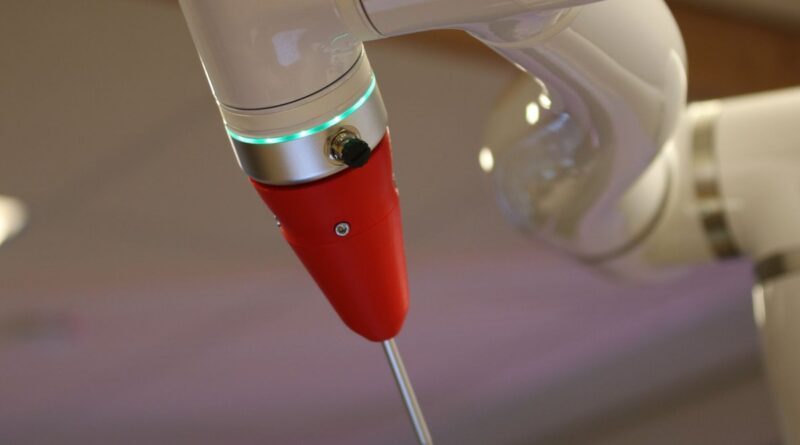
Emory & Georgia Tech Dual-Degree: Bridging Robotics and Medicine for Future Healthcare

Hostinger Cloud Hosting: Ultra-Fast NVMe Storage & 99.9% Uptime Guarantee
Power your high-traffic WordPress websites with managed cloud infrastructure, automated daily backups, free SSL, and 24/7 expert support.
📌 Key Takeaways
- Emory University and Georgia Tech established a dual-degree pathway combining an MD with a master's in robotics.
- The program addresses the critical need for professionals with expertise in both clinical medicine and advanced robotic engineering.
- Graduates are poised to innovate in areas like robotic surgery, prosthetics, and AI diagnostics, driving future healthcare advancements.
- This initiative serves as a model for interdisciplinary education, integrating technology into medical training to enhance patient care.
Emory & Georgia Tech Dual-Degree: Bridging Robotics and Medicine for Future Healthcare
In a forward-thinking move that continues to shape the trajectory of medical innovation, Emory University and Georgia Institute of Technology collaboratively established a pioneering dual-degree pathway, effectively bridging the historically disparate fields of medicine and robotics. This initiative, first announced in recent years, laid a crucial foundation for training a new generation of professionals equipped to integrate advanced robotic technologies into healthcare practices.
The program, a testament to inter-institutional collaboration, offers students the unique opportunity to earn both a medical degree (MD) from Emory University and a master’s degree in robotics from Georgia Tech. This strategic partnership was designed to cultivate experts capable of not only understanding complex medical challenges but also engineering sophisticated robotic solutions to address them. The genesis of this pathway recognized the escalating demand for clinicians with deep technological acumen, particularly as robotic surgery, assistive devices, and intelligent diagnostics continue their rapid integration into clinical settings.
Key Analysis: The Convergence of Care and Code
The establishment of the Emory-Georgia Tech dual-degree program was a proactive response to an undeniable trend: the accelerating convergence of healthcare and advanced technology. As analysts noted at the time of its announcement, traditional medical curricula often lacked the intensive engineering background necessary to truly innovate within the burgeoning field of medical robotics. Conversely, robotics engineers, while adept at design and automation, frequently lacked the clinical understanding required to develop applications that are truly effective, safe, and ethically sound in a patient care environment.
This dual-degree pathway directly addresses this gap, creating professionals who are fluent in both the language of human physiology and mechanical engineering. Graduates are expected to drive advancements in areas such as minimally invasive surgery, prosthetics, rehabilitation robotics, and AI-powered diagnostic tools. The program’s structure allows students to immerse themselves in clinical rotations while simultaneously engaging with cutting-edge robotics research, fostering a holistic perspective crucial for impactful innovation. Industry observers believe that such interdisciplinary programs are vital for maintaining the pace of technological progress in healthcare, ensuring that new tools are not just technologically impressive but also clinically relevant and patient-centric.
Why This Matters in the Long Run
Looking ahead from October 2026, the Emory-Georgia Tech dual-degree pathway stands as a critical exemplar for future educational models worldwide. Its long-term impact extends beyond producing individual experts; it champions a new paradigm for medical education that inherently integrates technological literacy. As healthcare systems globally grapple with increasing demands, aging populations, and the need for greater efficiency, robotic interventions offer significant potential for enhancing diagnostic accuracy, improving surgical outcomes, and extending the reach of care. The graduates of this program are positioned to be the architects of these future systems, leading research, development, and implementation efforts in hospitals, research institutions, and biotech firms. This foundational program is fostering a culture of innovation where technology is not merely an adjunct to medicine but an intrinsic component of its future evolution, ultimately leading to more precise, personalized, and accessible healthcare solutions.
📌 Key Questions Answered
What is the core focus of the Emory and Georgia Tech dual-degree pathway?
The dual-degree pathway focuses on bridging medicine and robotics, allowing students to earn both a medical degree (MD) from Emory and a master's in robotics from Georgia Tech.
Why was this interdisciplinary program established?
This program was established to meet the growing demand for professionals who can integrate advanced robotic technologies into healthcare, addressing the gap between clinical knowledge and engineering expertise.
What kind of impact are graduates of this program expected to have?
Graduates are expected to drive advancements in areas such as minimally invasive surgery, prosthetics, rehabilitation robotics, and AI-powered diagnostic tools, shaping the future of healthcare technology.
📚 Story Sources:
- New Emory and Georgia Tech Dual-Degree Pathway Bridges Medicine and Robotics | Newswise – Newswise (news.google.com)
Newswise reported on the initial announcement of the dual-degree pathway, highlighting the collaboration between Emory and Georgia Tech.
This article was synthesized by AI from the multiple sources above for educational and informational purposes.
Image Credit: Photo by Freek Wolsink on Pexels