
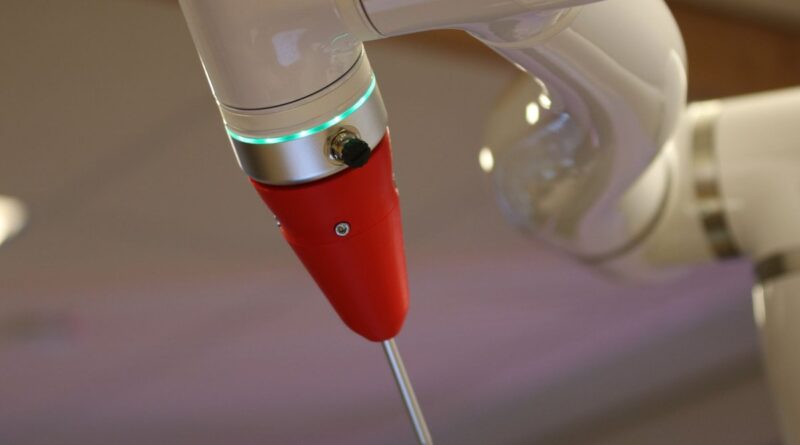
Robotics Reshapes Medicine: Emory & Georgia Tech’s Dual-Degree Pathway Forges Future Health Innovators

Hostinger Cloud Hosting: Ultra-Fast NVMe Storage & 99.9% Uptime Guarantee
Power your high-traffic WordPress websites with managed cloud infrastructure, automated daily backups, free SSL, and 24/7 expert support.
📌 Key Takeaways
- Emory University and Georgia Tech have launched a dual-degree pathway combining medicine and robotics.
- This program addresses the growing need for professionals skilled in both medical science and robotic engineering.
- The initiative aims to accelerate innovation in healthcare technology, from diagnostics to surgical procedures.
- It positions graduates to lead advancements in medical robotics, impacting patient care and healthcare efficiency globally.
Bridging Disciplines: The Future of Health Technology Takes Shape
In a strategic move poised to redefine healthcare innovation, Emory University and the Georgia Institute of Technology have collaboratively established a new dual-degree pathway that profoundly bridges medicine and robotics. This initiative, first announced and now gaining significant traction by October 2026, is cultivating a new generation of professionals equipped to navigate the complex intersection of advanced medical science and sophisticated robotic engineering, as reported by Newswise.
The program, a testament to forward-thinking academic leadership, aims to address the rapidly evolving demands within the healthcare sector. As robotic technologies become increasingly integral to diagnostics, surgical procedures, rehabilitation, and patient care, there is a critical need for practitioners who possess deep expertise in both medical principles and the intricacies of robotic systems. This dual-degree pathway is designed to meet that demand, fostering individuals capable of not just operating but also innovating and developing the next wave of health technologies.
Key Analysis: The Convergence Driving Innovation
The establishment of such a specialized pathway by two leading institutions like Emory, renowned for its medical research, and Georgia Tech, a powerhouse in engineering and robotics, signifies a crucial recognition of emerging global trends. Analysts suggest that this convergence is not merely academic; it reflects a fundamental shift in how medical challenges are being approached. The global market for medical robotics, already experiencing robust growth, is projected to expand further as precision surgery, assistive devices, and intelligent diagnostics become standard. This program directly feeds into that ecosystem by producing professionals who can design robotic prosthetics, develop AI-powered surgical assistants, or engineer intelligent drug delivery systems.
From a societal perspective, this initiative promises to accelerate the deployment of robotic solutions that can enhance patient outcomes, increase surgical precision, and potentially reduce healthcare costs through automation and efficiency. Ethical considerations, such as the role of AI in medical decision-making and patient data privacy in connected robotic systems, are likely to be integrated into the curriculum, preparing graduates for responsible innovation. The collaboration also strengthens the Southeast’s position as a hub for health technology, attracting further investment and talent.
Why This Matters in the Long Run
The Emory-Georgia Tech dual-degree pathway represents more than just an academic offering; it is a blueprint for the future of specialized education in an increasingly interdisciplinary world. In the long term, this model of integrated learning could become a standard for addressing complex global challenges that span multiple traditional fields. It prepares a workforce capable of translating cutting-edge research into practical applications, driving economic growth in high-tech sectors, and fundamentally improving human health. As medical robotics continue to advance, the individuals emerging from such programs will be at the forefront of breakthroughs, from enhancing surgical accuracy to enabling greater independence for individuals with disabilities, ultimately shaping a healthier, more technologically advanced society.
This strategic academic partnership underlines a proactive approach to future-proofing the healthcare workforce, ensuring that the innovations of tomorrow are built upon a foundation of comprehensive, integrated expertise.
📌 Key Questions Answered
What is the new dual-degree pathway about?
The new dual-degree pathway established by Emory University and the Georgia Institute of Technology is designed to bridge the disciplines of medicine and robotics, creating professionals with expertise in both fields.
Which institutions are involved in this program?
The program is a collaborative effort between Emory University, known for its medical research, and the Georgia Institute of Technology, recognized for its engineering and robotics programs.
What is the primary goal of this integrated program?
The primary goal is to cultivate a new generation of professionals capable of innovating and developing the next wave of health technologies by combining advanced medical science with sophisticated robotic engineering.
📚 Story Sources:
- New Emory and Georgia Tech Dual-Degree Pathway Bridges Medicine and Robotics | Newswise – Newswise (news.google.com)
Newswise reported on the establishment of this dual-degree pathway, highlighting the collaboration between Emory and Georgia Tech to bridge medicine and robotics.
This article was synthesized by AI from the multiple sources above for educational and informational purposes.
Image Credit: Photo by Freek Wolsink on Pexels
Pingback: Critical Bridge: Emory-GT Dual Degree Merges Medicine, Robotics - The Pivot News