
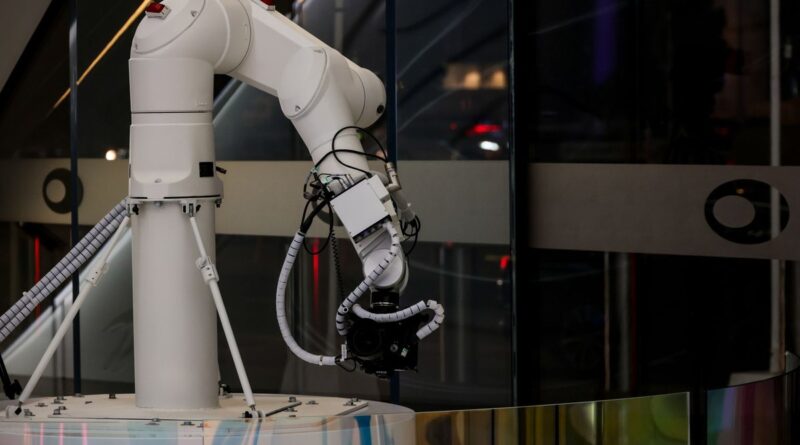
Deep Space Healthcare: NASA & Google AI Robot Progress 2026

Hostinger Cloud Hosting: Ultra-Fast NVMe Storage & 99.9% Uptime Guarantee
Power your high-traffic WordPress websites with managed cloud infrastructure, automated daily backups, free SSL, and 24/7 expert support.
📌 Key Takeaways
- By October 2026, NASA and Google's AI-powered medical robot project has significantly advanced beyond its initial testing phase.
- The robot is designed to provide autonomous healthcare, including diagnostics and interventions, crucial for long-duration deep space missions.
- This collaboration addresses critical challenges of space travel such as communication delays and limited on-board medical expertise.
- The technology is poised to revolutionize future space exploration and has potential terrestrial applications in remote medicine.
Deep Space Healthcare: NASA & Google AI Robot Progress 2026
By October 2026, the foundational work initiated by NASA and Google on AI-powered medical robots has matured significantly, promising unprecedented healthcare autonomy for humanity’s most ambitious deep space missions.
Context: Pioneering Autonomous Medical Care
Reports from 2024 detailed the joint efforts of NASA and Google in testing an AI-powered medical robot designed to provide critical healthcare services during extended voyages beyond Earth orbit. This collaboration was a direct response to the inherent challenges of deep space travel: the immense distances leading to significant communication delays, the limited medical expertise typically available on small crews, and the need for immediate, on-site intervention in medical emergencies. The initial tests focused on validating the robot’s diagnostic capabilities, ability to perform basic medical procedures, and its resilience within simulated space environments, laying the groundwork for what has become a pivotal technology.
Analysis: Advancing Autonomy in Space Medicine
Two years post-initial testing, the progress in autonomous medical robotics is substantial. The core AI system, leveraging Google’s advanced machine learning algorithms, has evolved to integrate complex sensor data from biological monitors, environmental controls, and crew feedback. This allows for highly accurate, real-time diagnostic assessments, moving beyond simple symptom recognition to predictive health analytics. Current iterations of the robot are designed for a range of interventions, from administering medications and performing minor surgical procedures under remote guidance (or autonomously in critical, time-sensitive scenarios) to managing complex trauma and mental health support. The ethical framework governing autonomous medical decision-making in space remains a subject of ongoing research, with protocols being developed by institutions like the European Space Agency (ESA) and MIT’s Space Systems Laboratory to ensure human oversight and ethical AI deployment.
Key Analysis: Overcoming Operational Hurdles
Industry observers note that the integration of Google’s AI capabilities with NASA’s space-hardened systems has accelerated development, particularly in creating robust, radiation-tolerant hardware and software capable of operating reliably for years. Challenges such as power consumption, data processing efficiency in low-latency environments, and the ability to adapt to unforeseen medical conditions have been incrementally addressed through iterative testing at NASA’s Johnson Space Center and Google’s AI research divisions. The market for terrestrial spin-offs, particularly in remote medicine and disaster relief, is also beginning to emerge, driven by the extreme operational demands met by these space-faring systems.
Why This Matters in the Long Run
The successful development and deployment of AI-powered medical robots represent a paradigm shift for long-duration space exploration. It fundamentally changes the risk calculus for missions to Mars and beyond, reducing reliance on Earth-based medical teams and mitigating the impact of medical emergencies. This autonomy is not merely about survival; it’s about enabling deeper scientific exploration and the eventual establishment of sustainable off-world habitats. Furthermore, the advancements in AI diagnostics and robotic intervention developed for space will inevitably find applications on Earth, revolutionizing healthcare delivery in remote, underserved, or hazardous environments, pushing the boundaries of what is medically possible globally.
Conclusion
The journey from initial testing to near-operational readiness of NASA and Google’s AI medical robot underscores a critical step towards making humanity a truly multi-planetary species, ensuring health and safety far from home.
📌 Key Questions Answered
What is the primary purpose of the AI-powered medical robot developed by NASA and Google?
The robot is designed to provide critical, autonomous healthcare services during long-duration deep space missions, addressing challenges like communication delays and limited on-board medical expertise.
Who are the main collaborators in this AI medical robot project?
The project is a joint effort between NASA, contributing its expertise in space systems, and Google, providing advanced AI and machine learning capabilities.
Why is an AI medical robot necessary for deep space missions?
Such a robot is crucial due to the vast distances involved, which cause significant communication delays with Earth, and the necessity for immediate medical intervention when human medical experts are unavailable or limited on crew.
📚 Story Sources:
This article was synthesized by AI from the multiple sources above for educational and informational purposes.
Image Credit: Photo by Magda Ehlers on Pexels