
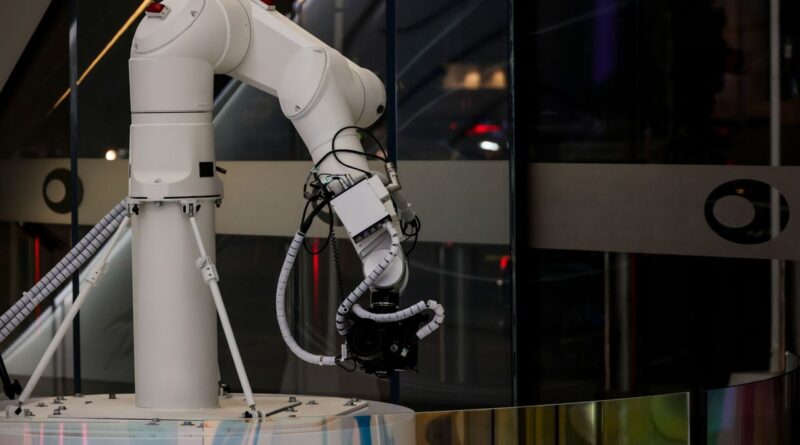
Pioneering AI Medical Robot Tests Reshape Deep Space Healthcare Prospects

Hostinger Cloud Hosting: Ultra-Fast NVMe Storage & 99.9% Uptime Guarantee
Power your high-traffic WordPress websites with managed cloud infrastructure, automated daily backups, free SSL, and 24/7 expert support.
📌 Key Takeaways
- In the mid-2020s, NASA and Google collaborated to test AI-powered medical robots for deep space missions.
- These tests addressed the critical need for autonomous healthcare due to communication delays and limited medical expertise during long-duration space travel.
- The collaboration leveraged NASA's space operational knowledge with Google's advanced AI capabilities.
- This pioneering work is foundational for future human expeditions to Mars and beyond, with potential terrestrial applications in remote medicine.
Pioneering AI Medical Robot Tests Reshape Deep Space Healthcare Prospects
The mid-2020s marked a pivotal moment in the evolution of space medicine, with NASA and Google jointly pioneering the development and testing of AI-powered medical robots. These systems were specifically designed to meet the extreme demands of future deep space missions, laying critical groundwork for autonomous healthcare far beyond Earth’s immediate vicinity.
Context: A Leap Towards Autonomous Space Healthcare
As reported by outlets like Nextgov/FCW around 2024-2025, these initial tests represented a significant leap forward. The collaboration between NASA, the world’s foremost space agency, and Google, a global leader in artificial intelligence, aimed to address the formidable challenges of medical emergencies during long-duration space expeditions. With human missions to Mars and beyond on the horizon, the necessity for on-board, intelligent medical intervention became undeniable, circumventing the critical limitations of communication latency and limited human medical expertise in transit.
Analysis: The Imperative of Off-World Autonomy
The core ‘why’ behind these developments is multifaceted. Deep space communication involves significant time delays, making real-time consultation with Earth-based medical professionals impractical, if not impossible, during a crisis. Astronauts, while highly trained, may not possess specialized medical expertise beyond basic first aid. Furthermore, the physiological stresses of microgravity and radiation exposure introduce unique health risks that require immediate, precise diagnostics and treatment. AI-powered medical robots offer a solution by providing on-site diagnostic capabilities, surgical assistance, and continuous health monitoring, functioning as an extension of terrestrial medical support.
The synergy between NASA’s deep understanding of space operational requirements and Google’s advanced machine learning algorithms was crucial. NASA provided the operational context and regulatory framework, while Google contributed the sophisticated AI models capable of processing vast amounts of medical data, learning from diverse case studies, and making rapid, data-driven recommendations or interventions. This blend of expertise was essential in developing robust systems that could operate reliably in harsh extraterrestrial environments.
Key Analysis: Foundational for Future Missions
Analysts suggest that these early NASA-Google tests were foundational, paving the way for the more advanced autonomous medical systems currently being integrated into next-generation lunar gateways and Mars transit vehicles. Research institutions globally have since built upon these initial concepts. For instance, teams at MIT and Stanford have been at the forefront of developing predictive diagnostics, leveraging AI to anticipate astronaut health issues before they become critical, and designing adaptive treatment protocols that can adjust based on real-time physiological responses. Ethical considerations, particularly regarding the autonomy of AI in life-or-death medical decisions and data privacy for astronauts, remain central to ongoing development, with extensive research being conducted by bioethics departments at leading universities worldwide.
Why This Matters in the Long Run
The development of AI medical robots for deep space exploration extends far beyond the confines of spacecraft. This pioneering work is a crucial step towards enabling humanity’s long-term presence beyond Earth, transforming space exploration from short-duration visits to sustainable multi-planetary living. The advancements in AI diagnostics, robotic surgery, and remote patient monitoring developed for space hold immense potential for terrestrial applications, particularly in remote medicine, disaster relief, and improving healthcare access in underserved regions globally. It represents a paradigm shift in how we conceive of healthcare delivery, pushing the boundaries of what intelligent systems can achieve in critical situations.
Conclusion
The early collaboration between NASA and Google on AI medical robotics stands as a landmark achievement. It underscores humanity’s unwavering commitment to extending its reach into the cosmos, supported by increasingly robust, intelligent, and autonomous systems designed to ensure the health and safety of future spacefarers.
📌 Key Questions Answered
Why are AI medical robots essential for deep space missions?
AI medical robots are essential due to significant communication delays with Earth, limited on-board human medical expertise, and the need for immediate, precise intervention for unique health risks faced by astronauts in microgravity and radiation environments.
What roles did NASA and Google play in these tests?
NASA provided the operational context, regulatory framework, and deep understanding of space mission requirements, while Google contributed advanced machine learning algorithms and AI models for diagnostics and decision-making.
What are the long-term implications of AI medical robots for space exploration?
These robots are crucial for enabling humanity's long-term presence beyond Earth, transforming space exploration into sustainable multi-planetary living, and offering advancements applicable to remote terrestrial healthcare.
📚 Story Sources:
This article was synthesized by AI from the multiple sources above for educational and informational purposes.
Image Credit: Photo by Magda Ehlers on Pexels
Pingback: UT Dell Medicine: Two Years On, An AI-Native Hospital's Impact in 2026 - The Pivot News