
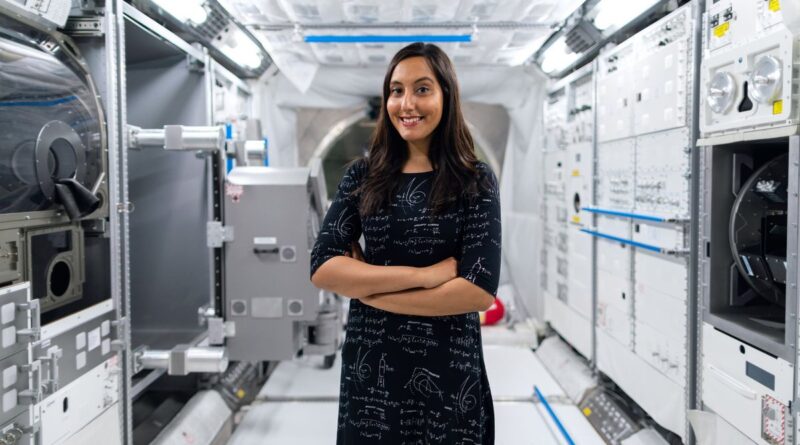
NASA’s Evolving Vision: Super Intelligence and the Future of Space Exploration

Hostinger Cloud Hosting: Ultra-Fast NVMe Storage & 99.9% Uptime Guarantee
Power your high-traffic WordPress websites with managed cloud infrastructure, automated daily backups, free SSL, and 24/7 expert support.
📌 Key Takeaways
- NASA is actively exploring Super Intelligence (SI) to address the complexity and data challenges of advanced space missions.
- SI is seen as crucial for autonomous spacecraft operations, real-time data analysis, and accelerating scientific discovery in deep space.
- The development of SI for space raises significant ethical questions regarding alignment with human values and the safety of critical infrastructure.
- This pursuit is expected to drive global investment in AI, robotics, and quantum computing, fostering both collaboration and competition.
NASA’s Evolving Vision: Super Intelligence and the Future of Space Exploration
By late 2026, NASA’s public discourse and internal research increasingly acknowledge Super Intelligence (SI) not merely as a theoretical construct, but as a critical frontier for both terrestrial and extraterrestrial challenges. The space agency, long at the forefront of technological innovation, is now actively exploring how advanced artificial intelligence could fundamentally reshape our understanding and interaction with the cosmos.
The Strategic Imperative: Why NASA Needs Advanced AI
NASA’s interest in Super Intelligence stems from the unprecedented scale and complexity of modern space missions. As outlined by NASA in its discussions on advanced artificial intelligence, missions to Mars, the outer planets, and beyond generate exabytes of data, far exceeding human capacity for real-time analysis. Furthermore, the immense distances involved mean communication delays can render human-in-the-loop decision-making impractical for critical, time-sensitive operations. This is where the concept of SI becomes a strategic imperative.
Analysts suggest that a truly superintelligent system could autonomously manage complex spacecraft operations, predict and mitigate system failures before they occur, and analyze vast datasets from telescopes and probes to accelerate scientific discovery. Imagine an AI capable of designing novel experiments on distant celestial bodies, or optimizing interstellar probe trajectories with efficiencies beyond current human comprehension. Research initiatives at institutions like MIT and Stanford, often in collaboration with NASA’s Jet Propulsion Laboratory (JPL), are laying the groundwork for AI systems that can handle increasingly sophisticated tasks, moving beyond narrow AI to more generalized problem-solving capabilities essential for deep space autonomy.
Key Analysis: Ethical Frontiers and Global Implications
The pursuit of Super Intelligence, even within the controlled environment of space exploration, raises profound ethical and societal questions. While NASA’s immediate focus is on mission-critical applications, the broader implications for humanity are undeniable. Ensuring alignment between SI goals and human values remains a paramount concern, as highlighted by discussions at global forums involving organizations like DeepMind and OpenAI. The potential for unintended consequences, particularly in systems controlling critical space infrastructure, necessitates robust ethical frameworks and fail-safes.
From a global market perspective, the race to develop and deploy advanced AI in space could spur significant investment in AI research, quantum computing, and advanced robotics. Nations and private entities are keenly aware that leadership in space AI could translate into geopolitical and economic advantages. This dynamic fosters both unprecedented international collaboration on shared challenges, such as asteroid defense, and heightened competition for technological supremacy in the rapidly expanding space economy.
Why This Matters in the Long Run
The integration of Super Intelligence into NASA’s operational fabric represents a pivotal shift, moving humanity closer to a future where machines play an increasingly autonomous role in our grandest endeavors. In the long run, this convergence of advanced AI and space exploration will not only accelerate our understanding of the universe but also force a re-evaluation of humanity’s role within it. The ethical guidelines, safety protocols, and governance models developed for space-based SI could well become the blueprint for managing such powerful intelligences on Earth, shaping our collective future for centuries to come.
Conclusion
As 2026 draws to a close, NASA’s proactive engagement with the concept of Super Intelligence underscores a transformative era where the boundaries of exploration are no longer limited by human cognitive capacity alone, but by the very intelligence we create.
📌 Key Questions Answered
What is NASA's primary interest in Super Intelligence?
NASA's primary interest in Super Intelligence is to manage the immense data generated by space missions, overcome communication delays for autonomous operations, and accelerate scientific discovery beyond human capacity.
How might Super Intelligence impact future space exploration?
Super Intelligence could revolutionize space exploration by enabling autonomous mission management, predicting system failures, analyzing vast datasets, and designing novel experiments for distant celestial bodies.
What ethical considerations are associated with NASA's pursuit of Super Intelligence?
Ethical considerations include ensuring alignment between Super Intelligence goals and human values, preventing unintended consequences in critical space infrastructure, and developing robust ethical frameworks and fail-safes.
📚 Story Sources:
- Super Intelligence – NASA (.gov) (news.google.com)
This article was synthesized by AI from the multiple sources above for educational and informational purposes.
Image Credit: Photo by ThisIsEngineering on Pexels