
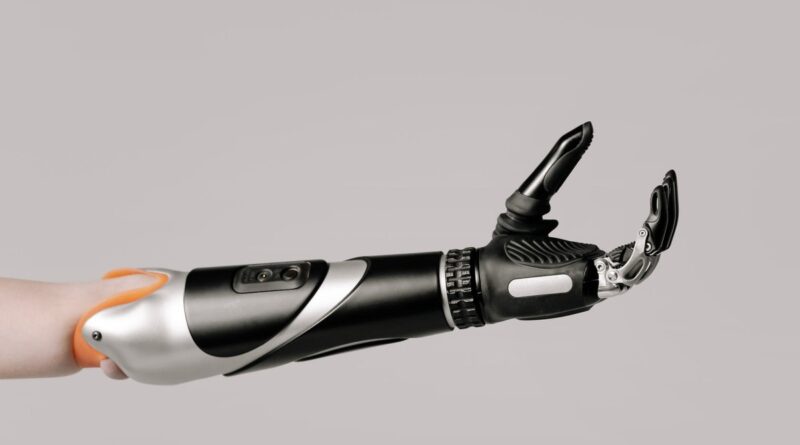
AI Medical Robots: Deep Space Healthcare in 2026

Hostinger Cloud Hosting: Ultra-Fast NVMe Storage & 99.9% Uptime Guarantee
Power your high-traffic WordPress websites with managed cloud infrastructure, automated daily backups, free SSL, and 24/7 expert support.
📌 Key Takeaways
- NASA and Google collaborated on testing an AI-powered medical robot for deep space missions, as reported by Nextgov/FCW.
- The initiative aimed to provide autonomous healthcare solutions for astronauts facing communication delays on long-duration voyages.
- This development has long-term implications for both space exploration and terrestrial healthcare, including remote medical assistance and ethical AI frameworks.
- The project highlights the growing importance of AI in critical and high-stakes environments like deep space.
AI Medical Robots: Deep Space Healthcare in 2026
In a pivotal collaboration that continues to resonate across space exploration and artificial intelligence sectors, NASA and Google previously announced their joint efforts to test an AI-powered medical robot designed for deep space missions. This initiative, initially reported by Nextgov/FCW, marked a significant step towards autonomous healthcare solutions for future long-duration human voyages, a critical necessity as humanity pushes further into the solar system.
The core concept behind this development, as understood in late 2026, revolves around addressing the formidable challenges of medical emergencies far from Earth. Astronauts on missions to Mars or beyond face communication delays that render real-time Earth-based medical consultation impractical. An AI-driven robotic system could offer immediate diagnostic capabilities, surgical assistance, and psychological support, mitigating risks inherent in prolonged isolation and limited resources.
Key Analysis: Autonomous Healthcare’s Ascent
The collaboration between NASA, a titan in space exploration, and Google, a leader in AI innovation, underscored the interdisciplinary nature of future tech. The AI medical robot, often referred to in preliminary reports as a ‘robotic medic’ or ‘autonomous health unit,’ was envisioned to perform a range of tasks from routine check-ups to complex interventions. Experts at institutions like Stanford University and MIT, who have been tracking such developments, highlight the system’s potential to revolutionize not just space medicine but also remote terrestrial healthcare.
The ‘why’ behind this innovation is clear: survival. Deep space missions demand self-sufficiency. The AI’s role extends beyond mere automation; it involves learning, adapting, and making informed decisions in novel medical scenarios, a testament to advancements in machine learning and predictive analytics. Ethical considerations, including the autonomy of AI in life-or-death situations and data privacy for astronaut health records, have been central to ongoing discussions among global regulatory bodies and space agencies since the project’s inception.
Why This Matters in the Long Run
The development and testing of AI medical robots for deep space missions carry profound long-term implications. Beyond enabling human missions to Mars and asteroid belts, the technologies refined for extreme extraterrestrial environments often find their way back to Earth. Robust, autonomous medical systems could transform healthcare in remote terrestrial regions, disaster zones, or even enhance personalized medicine in urban centers. Furthermore, the ethical frameworks established for AI autonomy in space will inevitably inform policies for AI integration into critical services on Earth, shaping future human-AI interaction across various sectors. The market for advanced robotic medical assistance, both in space and on Earth, is projected for substantial growth, driven by an aging global population and the increasing demand for accessible, high-quality care.
As we look forward from October 2026, the foundational work laid by NASA and Google in AI medical robotics remains a cornerstone of humanity’s ambitious push into the cosmos, promising a future where distance no longer dictates the quality of care.
📌 Key Questions Answered
What was the primary purpose of the NASA and Google AI medical robot collaboration?
The primary purpose was to test an AI-powered medical robot for deep space missions, addressing the challenges of medical emergencies in environments with significant communication delays to Earth.
Which organizations were involved in this AI medical robot project?
NASA, the U.S. space agency, and Google, a leading technology company, were involved in the collaboration to test the AI medical robot.
What kind of tasks was the AI medical robot designed to perform?
The AI medical robot was envisioned to perform a range of tasks, including immediate diagnostic capabilities, surgical assistance, and psychological support for astronauts on long-duration missions.
📚 Story Sources:
This article was synthesized by AI from the multiple sources above for educational and informational purposes.
Image Credit: Photo by cottonbro studio on Pexels