
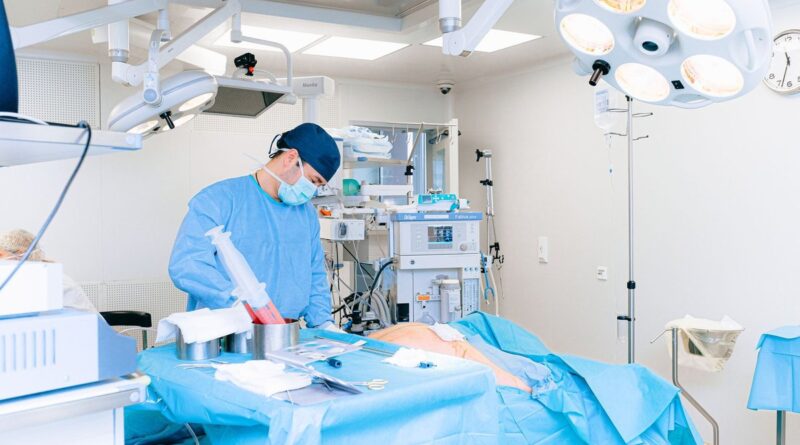
AI Medical Robot: NASA & Google’s Deep Space Healthcare Vision

Hostinger Cloud Hosting: Ultra-Fast NVMe Storage & 99.9% Uptime Guarantee
Power your high-traffic WordPress websites with managed cloud infrastructure, automated daily backups, free SSL, and 24/7 expert support.
📌 Key Takeaways
- NASA and Google are collaborating on an AI-powered medical robot for deep space missions, first reported in late 2024.
- The robot aims to provide autonomous medical diagnostics and treatment for astronauts, crucial for missions beyond Earth due to communication delays.
- The project leverages Google's AI expertise with NASA's space medicine knowledge, addressing both technological and ethical challenges.
- This innovation has significant long-term implications for both space exploration and terrestrial healthcare, particularly in remote and critical care settings.
AI Medical Robot: NASA & Google’s Deep Space Healthcare Vision
As humanity pushes further into the cosmos, the challenge of providing immediate, expert medical care across vast distances becomes paramount. The collaborative efforts between NASA and Google to develop and test an AI-powered medical robot for deep space missions, first reported in detail in late 2024, represent a critical pivot in extraterrestrial healthcare strategy.
This initiative, which has seen significant testing and refinement over the past two years, aims to equip future long-duration space missions—such as those to Mars or beyond—with autonomous diagnostic and treatment capabilities. The partnership leverages NASA’s extensive experience in space medicine and operational protocols with Google’s cutting-edge advancements in artificial intelligence, machine learning, and predictive analytics. The core concept revolves around a robotic system capable of assessing astronaut health, diagnosing ailments, and even performing basic medical procedures without direct human intervention from Earth, a necessity given the prohibitive communication delays over interplanetary distances.
Key Analysis: The Imperative for Autonomous Care
The rationale behind this ambitious project is rooted in the fundamental limitations of human physiology and current communication technology. For missions extending months or years away from Earth, real-time medical consultation with ground control becomes impossible due to light-speed delays. A medical emergency requiring immediate intervention could prove fatal if astronauts must wait hours for a response from Earth. This AI medical robot is designed to bridge that gap, acting as an on-board physician, diagnostician, and surgical assistant.
Experts at institutions like MIT’s Space Systems Laboratory have long highlighted the need for such autonomy. The robot is envisioned to integrate vast medical databases, real-time physiological data from astronauts, and advanced sensor arrays to provide highly accurate diagnoses. Furthermore, its AI is being trained on millions of medical cases, enabling it to identify subtle patterns that might elude human observation under stressful conditions. Google’s DeepMind, for instance, has been instrumental in developing the diagnostic algorithms, focusing on robust decision-making under uncertainty, a critical factor in the novel environments of space.
Ethical and Operational Frontiers
While the technological promise is immense, the development also navigates complex ethical and operational frontiers. The prospect of an AI making life-or-death medical decisions raises questions about accountability, human oversight, and the psychological impact on crew members. NASA’s Human Research Program, in conjunction with bioethicists from Stanford University, has been actively involved in establishing protocols for AI decision-making, ensuring transparency, and building astronaut trust in autonomous systems. The current testing phases focus not only on technical proficiency but also on human-robot interaction and the psychological integration of such a system into a small, isolated crew environment.
Why This Matters in the Long Run
The development of an AI-powered medical robot for deep space missions transcends its immediate application. It represents a significant leap towards true human independence in space, enabling longer, more complex expeditions without the constant umbilical cord to Earth. Beyond space, the technologies pioneered here—autonomous diagnostics, remote robotic surgery, and AI-driven predictive health maintenance—hold profound implications for terrestrial healthcare, particularly in remote regions, disaster zones, and for future telemedicine applications. This collaboration is not just about space exploration; it’s about redefining the boundaries of medical care itself.
As testing continues and the technology matures, the NASA-Google AI medical robot stands as a testament to humanity’s relentless drive to overcome challenges, pushing the frontiers of both space and artificial intelligence in pursuit of a multi-planetary future.
📌 Key Questions Answered
What is the primary purpose of the NASA-Google AI medical robot?
The robot is designed to provide autonomous diagnostic and treatment capabilities for astronauts on long-duration deep space missions, overcoming communication delays with Earth.
When was this collaboration first reported?
The collaboration and initial testing phases were first reported in detail in late 2024, with significant refinement continuing into 2026.
What are the broader implications of this technology?
Beyond space exploration, the technology holds profound implications for terrestrial healthcare, including remote medicine, disaster relief, and advanced telemedicine applications.
📚 Story Sources:
This article was synthesized by AI from the multiple sources above for educational and informational purposes.
Image Credit: Photo by Anna Shvets on Pexels