
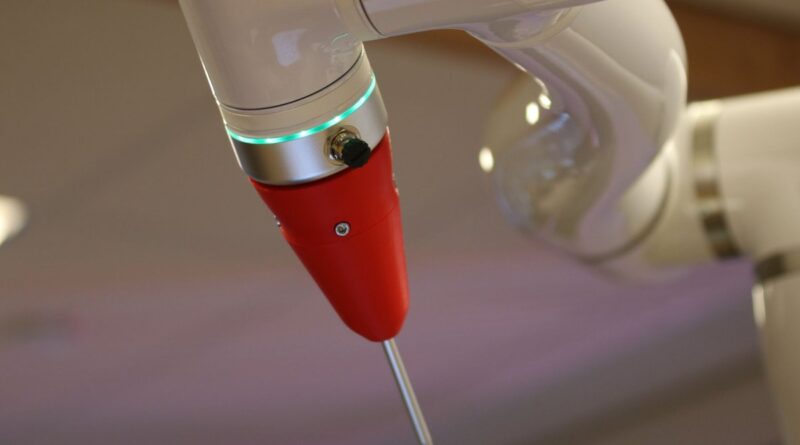
Robotic Hernia Surgery: Precision Redefines Patient Care by 2026

Hostinger Cloud Hosting: Ultra-Fast NVMe Storage & 99.9% Uptime Guarantee
Power your high-traffic WordPress websites with managed cloud infrastructure, automated daily backups, free SSL, and 24/7 expert support.
📌 Key Takeaways
- By 2026, robotic-assisted surgery has become a standard for hernia repair, offering superior precision and patient outcomes.
- Robotic systems enhance surgical capabilities through 3D visualization, dexterity, tremor filtration, and increasingly, AI integration.
- Benefits include faster recovery, reduced pain, and shorter hospital stays, though high initial costs and training remain adoption challenges.
- This technological shift in hernia surgery foreshadows a broader future of AI-augmented, personalized, and more effective surgical interventions across medicine.
By November 2026, robotic-assisted surgery has solidified its position as a transformative force in the medical field, particularly in procedures like hernia repair. What was once a nascent technology is now a cornerstone of advanced surgical practice, offering unprecedented precision and improved patient outcomes.
The revolution in hernia surgery, as highlighted by publications like Tech Briefs, centers on the ability of robotic systems to augment a surgeon’s capabilities. These platforms provide enhanced 3D visualization, greater dexterity, and tremor filtration, allowing for minimally invasive repairs that were previously challenging or impossible with traditional laparoscopic techniques. This evolution has led to a significant paradigm shift in how common conditions like inguinal and ventral hernias are treated globally.
Key Analysis: Precision, Access, and Economic Implications
The core of robotic surgery’s impact lies in its precision. Surgeons operating with robotic assistance can navigate complex anatomical structures with sub-millimeter accuracy, reducing tissue trauma and blood loss. This translates directly to quicker recovery times, less post-operative pain, and shorter hospital stays for patients, a critical factor in healthcare efficiency. Leading medical institutions, such as those affiliated with Stanford University and Johns Hopkins Medicine, have been at the forefront of refining these techniques, publishing extensive data on their efficacy and safety profiles over the past decade.
Furthermore, the advancements in robotic platforms extend beyond mere mechanical precision. Contemporary systems often integrate AI-powered analytics for pre-operative planning and intra-operative guidance, leveraging vast datasets of surgical outcomes to optimize procedural steps. Haptic feedback technology, which provides surgeons with a sense of touch through robotic instruments, has also become more sophisticated, further bridging the gap between direct human touch and robotic mediation. This blend of robotics and artificial intelligence signals a new era of intelligent surgical assistance, moving beyond simple automation to genuine augmentation of human skill.
However, the widespread adoption of robotic surgery is not without its complexities. The initial capital investment for these sophisticated systems remains substantial, posing a barrier for smaller hospitals or healthcare systems in developing nations. Training surgeons to proficiency on these platforms also requires significant time and resources, necessitating dedicated fellowship programs and simulation-based learning. Despite these challenges, the long-term benefits in terms of reduced complications and improved patient throughput are increasingly justifying the investment for many leading medical centers across the US, Europe, and Asia.
Why This Matters in the Long Run
The robotic revolution in hernia surgery is a microcosm of a larger trend reshaping medicine: the integration of advanced technology to enhance human capability. In the long run, this trajectory points towards a future where surgical interventions are not only safer and more effective but also more accessible and personalized. As robotic platforms become more compact, affordable, and AI-driven, their application will undoubtedly expand beyond hernia repair to an even broader spectrum of complex procedures, from oncology to cardiothoracic surgery. This ongoing evolution promises a future where surgical outcomes are consistently optimized through a synergistic partnership between human expertise and machine precision, fundamentally redefining patient care.
Conclusion
By November 2026, robotic technology has undeniably transformed hernia surgery, setting a new standard for precision and patient recovery. The continuous innovation in this domain underscores a broader shift towards technologically augmented healthcare, promising a future of increasingly refined and effective medical interventions.
📌 Key Questions Answered
What are the primary benefits of robotic hernia surgery?
Robotic hernia surgery offers enhanced precision, leading to reduced tissue trauma, less post-operative pain, quicker recovery times, and shorter hospital stays for patients.
How has robotic technology evolved for hernia repair by 2026?
By 2026, robotic platforms for hernia repair integrate AI-powered analytics for planning, sophisticated haptic feedback, and improved 3D visualization, augmenting surgeon capabilities significantly.
What challenges exist in the widespread adoption of robotic surgery?
Challenges include the substantial initial capital investment for robotic systems and the significant time and resources required for surgeon training and proficiency.
📚 Story Sources:
- How Robots Are Revolutionizing Hernia Surgery – Tech Briefs (news.google.com)
This article was synthesized by AI from the multiple sources above for educational and informational purposes.
Image Credit: Photo by Freek Wolsink on Pexels