
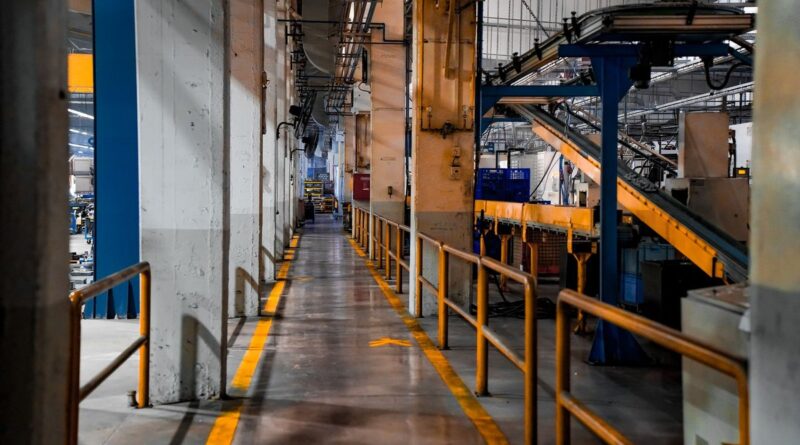
AI & Robotics Transform American Manufacturing by 2026

Hostinger Cloud Hosting: Ultra-Fast NVMe Storage & 99.9% Uptime Guarantee
Power your high-traffic WordPress websites with managed cloud infrastructure, automated daily backups, free SSL, and 24/7 expert support.
📌 Key Takeaways
- By November 2026, AI and robotics have fundamentally reshaped American manufacturing, moving beyond theoretical discussions to tangible operational advancements.
- The integration aims to enhance efficiency, resilience, and competitiveness, with factories increasingly deploying intelligent automation systems.
- Strategic imperatives for this shift include global supply chain vulnerabilities, labor shortages, and the economic advantages of optimized production.
- The long-term impact involves strengthening national economic security, fostering innovation, and requiring ongoing workforce retraining to adapt to new roles.
AI & Robotics Transform American Manufacturing by 2026
As of November 2026, the integration of Artificial Intelligence (AI) and robotics has fundamentally reshaped the landscape of American manufacturing, moving beyond theoretical discussions to tangible operational advancements. A foundational Q&A from Tech Xplore, published in recent years, highlighted the nascent stages of this evolution, posing critical questions about its trajectory. Today, the answers to those questions are becoming increasingly clear, demonstrating a profound pivot towards enhanced efficiency, resilience, and competitiveness.
The discussion initiated by Tech Xplore underscored the potential for AI and robotics to revitalize domestic production, address labor shortages, and accelerate innovation. By 2026, these predictions have largely materialized. Factories across the United States are increasingly deploying intelligent automation systems capable of optimizing production lines, performing complex tasks with precision, and adapting to changing demands. This shift is not merely about replacing human labor but augmenting it, creating new roles centered on oversight, programming, and advanced maintenance, while significantly boosting output quality and speed.
Key Analysis: The “Why” Behind the Automation Surge
The impetus for this deep integration stems from several strategic imperatives. Firstly, global supply chain vulnerabilities exposed in the early 2020s necessitated a renewed focus on domestic production capabilities and resilience. AI-driven robotics offer the flexibility and speed required for rapid reshoring and localized manufacturing, reducing dependence on distant and often fragile supply networks. Secondly, the persistent challenge of an aging workforce and skill gaps in traditional manufacturing roles has made automation an indispensable solution. Robots can undertake repetitive, dangerous, or physically demanding tasks, allowing human workers to transition into higher-value, cognitive roles.
Furthermore, the economic advantages are compelling. AI algorithms are optimizing everything from energy consumption on factory floors to predictive maintenance schedules, minimizing downtime and waste. This level of operational intelligence, once aspirational, is now a standard expectation in cutting-edge facilities. Analysts suggest that the competitive pressures from international markets, particularly those with advanced automation strategies, have also accelerated the adoption rate within American industries, pushing companies to invest heavily in smart factory technologies to maintain their global standing.
Why This Matters in the Long Run
The long-term implications of this transformation extend far beyond the factory floor. The widespread adoption of AI and robotics in American manufacturing is a critical pillar for national economic security and technological sovereignty. It promises to create a more robust, agile industrial base capable of responding swiftly to future crises and market shifts. Moreover, it fosters a new era of innovation, driving demand for advanced software, sensor technology, and specialized engineering skills, thereby strengthening the broader tech ecosystem. However, it also necessitates ongoing investment in workforce retraining and education to ensure that the human element of manufacturing evolves alongside its automated counterparts, preventing significant societal disruption and ensuring equitable economic growth.
The evolution of American manufacturing with AI and robotics is an ongoing narrative of adaptation and advancement. It represents a strategic imperative for sustained economic leadership and a testament to the transformative power of intelligent automation.
📌 Key Questions Answered
How is American manufacturing evolving with AI and robotics by 2026?
By 2026, American manufacturing has evolved significantly through the integration of AI and robotics, leading to enhanced efficiency, increased resilience, and improved competitiveness in domestic production.
What are the primary drivers behind the adoption of AI and robotics in US manufacturing?
Key drivers include the need for supply chain resilience after global vulnerabilities, addressing labor shortages and skill gaps, and leveraging economic advantages like optimized production and predictive maintenance.
What is the long-term impact of AI and robotics on American manufacturing?
The long-term impact includes strengthening national economic security, fostering innovation, creating a more robust industrial base, and necessitating continuous investment in workforce retraining for new roles.
📚 Story Sources:
This article was synthesized by AI from the multiple sources above for educational and informational purposes.
Image Credit: Photo by Yetkin Ağaç on Pexels
Pingback: US Super Intelligence Task Force: Two Years On, Redefining Tech Supremacy - The Pivot News