
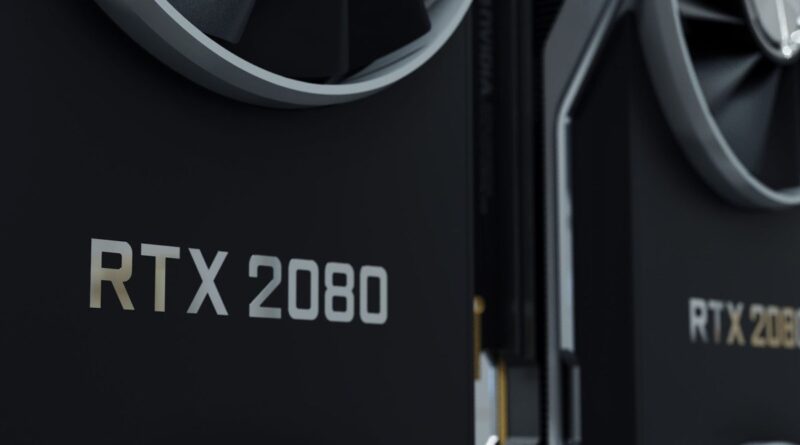
NVIDIA’s Enduring 2026 Impact: The Foundational Pillar of AI

Hostinger Cloud Hosting: Ultra-Fast NVMe Storage & 99.9% Uptime Guarantee
Power your high-traffic WordPress websites with managed cloud infrastructure, automated daily backups, free SSL, and 24/7 expert support.
📌 Key Takeaways
- NVIDIA, founded in 1993, became central to the AI revolution due to its GPU and CUDA platform.
- The parallel processing capabilities of NVIDIA GPUs provided the essential computational backbone for deep learning breakthroughs.
- NVIDIA’s technology powers AI models and edge devices across autonomous vehicles, smart cities, and healthcare.
- Its sustained innovation and comprehensive software integration ensure its continued market leadership and influence on AI.
Previously: AI ETFs in 2026: Navigating the Future of Artificial Intelligence Investment
NVIDIA’s Enduring 2026 Impact: The Foundational Pillar of AI
By November 2026, NVIDIA Corporation’s foundational role in the artificial intelligence revolution remains undisputed, a testament to its decades-long commitment to graphics processing and parallel computing.
Historical Context: The GPU’s Unforeseen Pivot
Founded in 1993, NVIDIA initially focused on graphics processing units (GPUs) for the burgeoning video game industry. However, as detailed by Britannica, the true pivot came with the realization that the parallel processing capabilities of GPUs were ideally suited for complex scientific computations and, critically, for the emerging field of artificial intelligence. The introduction of its CUDA (Compute Unified Device Architecture) platform further democratized access to this processing power, allowing researchers and developers to leverage GPUs for purposes far beyond traditional graphics rendering.
Key Analysis: The Unseen Architecture of AI Dominance
NVIDIA’s foresight in developing the GPU as a general-purpose parallel processor, rather than merely a graphics accelerator, proved to be its most significant strategic advantage. As analytical reports from institutions like Stanford’s AI Lab have consistently highlighted, the architecture of NVIDIA’s GPUs, coupled with the robust CUDA ecosystem, provided the essential computational backbone for the deep learning breakthroughs of the 2010s and 2020s. This early investment in parallel computing enabled the rapid training of increasingly complex neural networks, from image recognition and generative AI to sophisticated large language models. By 2026, NVIDIA hardware had become virtually synonymous with advanced AI development, serving as the preferred platform for research institutions like DeepMind and industry leaders alike.
Expert Insights: Societal Impact and Global Market Implications
The widespread adoption of NVIDIA’s technology has had profound societal implications, extending beyond the data center. Its GPUs power not only the supercomputers training the next generation of AI models but also the edge devices enabling real-time AI applications in autonomous vehicles, smart cities, and advanced medical imaging. This ubiquity has created a significant barrier to entry for competitors and solidified NVIDIA’s position as a critical infrastructure provider in the global digital economy. Market analysts, as noted by industry observers, frequently point to NVIDIA’s sustained innovation in chip design, such as its Hopper and Blackwell architectures, and its comprehensive software integration as key drivers of its enduring market leadership. This dominance continues to influence the pace and direction of AI innovation worldwide, raising discussions about the concentration of computational power.
Why This Matters in the Long Run: Shaping the Future of Compute
NVIDIA’s historical trajectory underscores a crucial lesson in technological evolution: foundational hardware and accessible software platforms are paramount to unlocking future innovations. Its continued investment in research and development, from quantum computing interfaces to specialized AI accelerators, suggests that its influence will persist. The company’s strategic decisions from the 1990s and early 2000s continue to shape the computational paradigms of 2026, influencing everything from scientific discovery to ethical AI development, posing ongoing questions about hardware monopolies and equitable access to cutting-edge computing power.
NVIDIA’s journey from a graphics card pioneer to an AI infrastructure giant illustrates the profound impact of strategic technological foresight on the global landscape, a legacy that continues to define the boundaries of what’s computationally possible.
📌 Key Questions Answered
What is NVIDIA's primary contribution to AI?
NVIDIA's primary contribution is the development of the Graphics Processing Unit (GPU) and its CUDA platform, which enabled the parallel processing essential for training complex artificial intelligence models.
When was NVIDIA founded?
NVIDIA Corporation was founded in 1993, initially focusing on graphics processing units for video games.
What is the significance of the CUDA platform?
The CUDA (Compute Unified Device Architecture) platform provided a software layer that allowed researchers and developers to easily program NVIDIA GPUs for general-purpose computing, including complex scientific computations and AI.
📚 Story Sources:
This article was synthesized by AI from the multiple sources above for educational and informational purposes.
Image Credit: Photo by Nana Dua on Pexels