
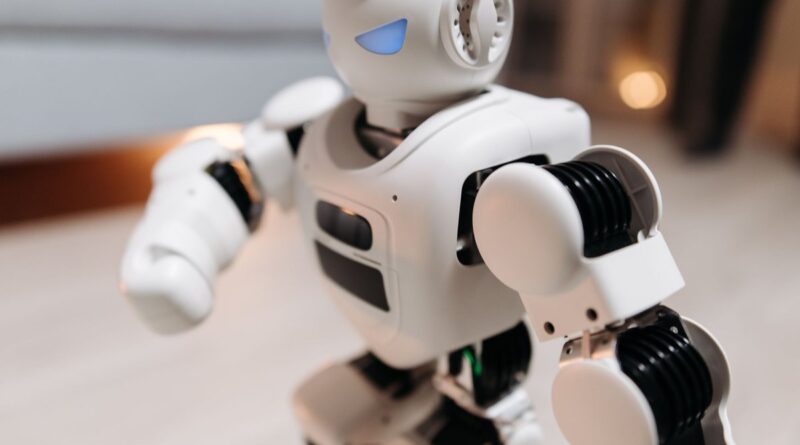
Electronics-Free Soft Robot: Speed Redefines Future Robotics 2026

Hostinger Cloud Hosting: Ultra-Fast NVMe Storage & 99.9% Uptime Guarantee
Power your high-traffic WordPress websites with managed cloud infrastructure, automated daily backups, free SSL, and 24/7 expert support.
📌 Key Takeaways
- Researchers developed the fastest soft robot capable of functioning entirely without electronic components.
- This innovation enhances durability and resilience, making robots immune to electronic failures in harsh environments.
- The design leverages advanced material properties and fluidic/pneumatic actuation for rapid, coordinated movement.
- Potential applications span medical devices, disaster response, deep-sea exploration, and extraterrestrial missions.
Electronics-Free Soft Robot: Speed Redefines Future Robotics 2026
A significant advancement in robotics, first highlighted in prior years, continues to reshape expectations for autonomous systems: the development of the fastest soft robot that operates entirely without electronic components. This innovation, initially reported by outlets like Tech Xplore, marked a pivotal moment in materials science and robotic engineering.
Developed by a team of researchers, this class of soft robots leverages novel actuation mechanisms, bypassing the traditional reliance on complex electronic circuitry for control and power. Its initial unveiling demonstrated a paradigm shift in how resilient and adaptable robotic systems could be designed. From the perspective of November 2026, the implications of this electronics-free approach are becoming increasingly clear, pointing towards a new era of robust and versatile automation.
Key Analysis: The Power of Simplicity and Resilience
The core innovation lies in the inherent simplicity and robustness offered by removing electronics. This design choice grants these soft robots immunity to electromagnetic interference, radiation, and water damage, opening up applications in extreme environments previously inaccessible to conventional robotics. This design philosophy prioritizes mechanical intelligence and material properties over computational power, allowing for systems that are intrinsically more durable and less prone to failure in harsh conditions.
Despite the absence of electronic brains, these soft robots achieved unprecedented speeds for their category. This performance challenges the long-held assumption that high-performance robotics necessitates intricate electronic control. The underlying reason for this speed lies in the clever integration of advanced material properties and fluidic or pneumatic actuation, which enables rapid, coordinated movements without the latency or complexity associated with electronic signals and processing units. Industry observers note that this approach could significantly reduce manufacturing costs and maintenance requirements for specialized robotic units.
Market and Societal Implications
While not yet a widespread commercial product, the principles demonstrated by these electronics-free soft robots have profound implications across multiple sectors. Consider the potential for medical devices that can operate safely within the human body without concerns about electronic interference or power sources. In disaster response, robots immune to EMPs or water damage could navigate hazardous zones more effectively. Furthermore, for extraterrestrial exploration, where radiation and extreme temperatures often compromise electronic systems, these resilient robots offer a promising alternative for long-duration missions.
Why This Matters in the Long Run
This technological trajectory points towards a future where robots are not merely complex machines but extensions of advanced materials science. The long-term impact involves a decentralization of robotic intelligence, fostering systems that are inherently more robust, sustainable, and capable of operating in environments where current electronic-laden robots fail. It pushes the boundaries of bio-inspired robotics, moving closer to the resilience and adaptability seen in natural organisms, fundamentally altering our approach to automation and interaction with challenging physical realities.
As research continues to refine these designs, the era of electronics-free robotics promises a new generation of machines, poised to tackle some of humanity’s most demanding physical challenges.
📌 Key Questions Answered
What is the primary breakthrough of this soft robot?
The primary breakthrough is its ability to operate at high speeds without any electronic components, relying instead on advanced materials and actuation mechanisms.
What advantages does an electronics-free robot offer?
It offers inherent immunity to electromagnetic interference, radiation, and water damage, making it ideal for extreme or hazardous environments where electronics typically fail.
What are the potential applications for such a robot?
Potential applications include medical devices, disaster response, deep-sea exploration, and extraterrestrial missions where electronic reliability is a critical issue.
📚 Story Sources:
- The fastest soft robot ever built doesn't need electronics to function – Tech Xplore (news.google.com)
This article was synthesized by AI from the multiple sources above for educational and informational purposes.
Image Credit: Photo by Pavel Danilyuk on Pexels