
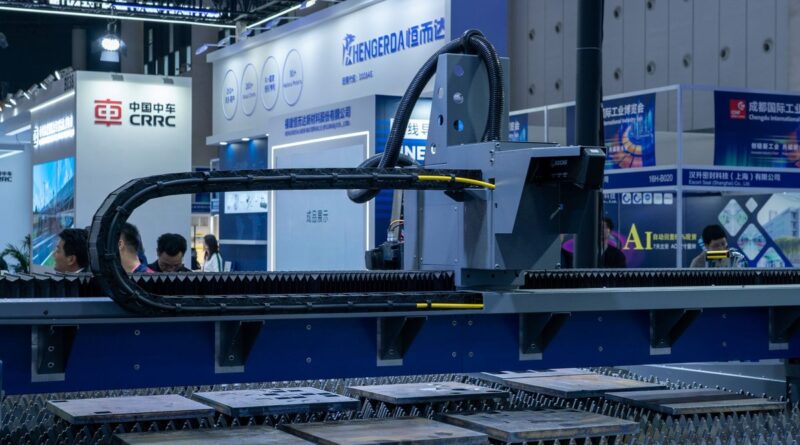
Catalyzing Breakthroughs: Tech Fairs Bridge Lab Innovations to Market in 2026

Hostinger Cloud Hosting: Ultra-Fast NVMe Storage & 99.9% Uptime Guarantee
Power your high-traffic WordPress websites with managed cloud infrastructure, automated daily backups, free SSL, and 24/7 expert support.
📌 Key Takeaways
- Tech fairs are crucial for bridging the gap between laboratory research and market commercialization.
- They act as vital conduits connecting innovators with investors and industry, particularly in dynamic Asian hubs.
- Successful technology transfer impacts global economies, job markets, and necessitates ethical considerations for new technologies.
- These platforms are essential for fostering collaborative innovation ecosystems and addressing global challenges effectively.
Catalyzing Breakthroughs: Tech Fairs Bridge Lab Innovations to Market in 2026
In an era defined by relentless technological advancement, the critical juncture between groundbreaking laboratory research and commercially viable market products remains a paramount focus. Dedicated tech fairs have emerged as indispensable platforms, actively addressing this bottleneck and accelerating the pace of innovation globally.
Building on insights from prominent outlets like chinadailyhk, which consistently highlights the efficacy of tech fairs in propelling lab innovations to market, the global innovation landscape in late 2026 continues to underscore the strategic importance of these specialized events. These platforms serve as vital conduits, meticulously connecting academic researchers and startup founders with the essential network of investors, manufacturers, and distribution channels. This is particularly evident within dynamic Asian innovation hubs, where the velocity of technology transfer is a key economic driver.
Catalyzing Technology Transfer
Over recent years, tech fairs have evolved significantly, transitioning from mere exhibition spaces into sophisticated, integrated ecosystems specifically designed to facilitate technology transfer. They orchestrate crucial interactions, enabling nascent technologies—ranging from advanced AI algorithms developed at institutions like the Chinese Academy of Sciences to novel biotechnologies emerging from Singapore’s Biopolis—to find their first industrial partners. This direct, facilitated engagement significantly shortens the innovation cycle, accelerating the journey from initial proof-of-concept to scalable pilot production. Analysts frequently point to these concentrated events as pivotal in de-risking early-stage technologies and providing the necessary momentum for market entry.
Economic and Societal Ripples
The successful commercialization of these lab innovations carries profound and far-reaching economic and societal implications. Globally, nations are increasingly leveraging these specialized fairs to bolster domestic industries, cultivate high-skill job markets, and enhance their competitive edge in critical sectors such as quantum computing, advanced robotics, and sustainable energy solutions. However, the rapid deployment of certain AI-driven innovations also necessitates ongoing, robust discussions around ethical deployment, the potential for job displacement, and stringent data privacy protocols, as observed by industry analysts meticulously monitoring the societal impact of accelerating automation.
Why This Matters in the Long Run
The sustained and growing emphasis on tech fairs as indispensable innovation accelerators will fundamentally reshape global R&D strategies and market dynamics for decades to come. In the long term, these platforms transcend transactional exchanges; they are about fostering resilient, collaborative innovation ecosystems that inherently transcend geographical and institutional boundaries. As the world confronts intensifying global challenges, from climate change mitigation to pervasive public health crises, the efficient and rapid translation of scientific breakthroughs into scalable, real-world solutions—often initiated and nurtured at these pivotal fairs—will be paramount for humanity’s adaptive capacity and sustained progress.
The ongoing success of tech fairs in effectively bridging the innovation gap serves as a powerful testament to their enduring relevance, positioning them as indispensable catalysts for the technological future.
📌 Key Questions Answered
What is the primary role of tech fairs in the innovation ecosystem?
Tech fairs primarily serve as platforms to connect academic researchers and startup founders with investors and industry partners, facilitating the transfer of laboratory innovations to commercial markets.
How do tech fairs impact the innovation cycle?
By enabling direct engagement between innovators and industry, these fairs significantly shorten the innovation cycle, accelerating the process from concept development to market deployment.
What are the broader implications of successful tech innovation transfer?
Successful technology transfer can bolster national economies, create high-skill jobs, and enhance global competitiveness, while also raising ethical considerations regarding new technologies.
📚 Story Sources:
- Tech fair helps bring lab innovations to market – chinadailyhk (news.google.com)
This article was synthesized by AI from the multiple sources above for educational and informational purposes.
Image Credit: Photo by Peter Xie on Pexels