
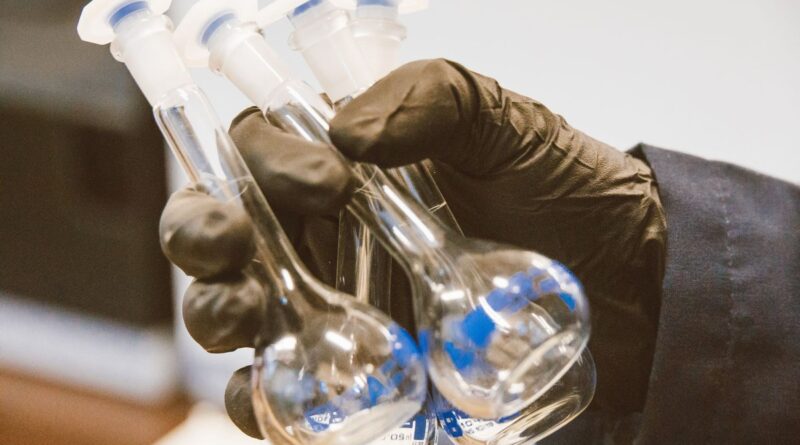
Catalyst Breakthrough: Reshaping Hydrogen Fuel Logistics in 2026

Hostinger Cloud Hosting: Ultra-Fast NVMe Storage & 99.9% Uptime Guarantee
Power your high-traffic WordPress websites with managed cloud infrastructure, automated daily backups, free SSL, and 24/7 expert support.
📌 Key Takeaways
- A significant study in late 2024 or early 2025 identified a catalyst crucial for efficient clean hydrogen fuel transportation.
- This discovery aims to resolve historical challenges posed by hydrogen's low density and reactivity, which have hampered its global distribution.
- The catalyst holds the potential to reduce costs and energy inputs for hydrogen transport, making the hydrogen economy more economically viable and scalable.
- The long-term impact includes democratizing access to clean hydrogen, reconfiguring global energy supply chains, and accelerating decarbonization efforts.
Catalyst Breakthrough: Reshaping Hydrogen Fuel Logistics in 2026
The persistent challenge of efficiently transporting clean hydrogen fuel took a decisive turn in late 2024 or early 2025 with the identification of a novel catalyst, a development that continues to shape the trajectory of global decarbonization efforts as of November 2026.
As reported by Tech Xplore at the time, a pivotal study pinpointed a catalytic agent designed to overcome critical hurdles in moving hydrogen from production sites to consumption points. This breakthrough addressed the inherent difficulties of hydrogen’s low volumetric energy density and its reactive nature, which historically complicated storage and long-distance conveyance, thereby hindering its widespread adoption as a clean energy vector. The discovery was met with significant optimism within the energy sector, recognizing its potential to unlock a truly global hydrogen economy.
The Transportation Bottleneck: A Historical Context
For decades, the promise of hydrogen as a zero-emission fuel has been tempered by the logistical complexities of its distribution. Hydrogen, being the lightest element, requires immense pressure (up to 700 bar) or cryogenic temperatures (-253°C) to achieve sufficient energy density for economically viable transport. These methods are energy-intensive, costly, and demand specialized infrastructure, creating a significant bottleneck in the hydrogen supply chain. Alternative methods, such as converting hydrogen into ammonia or Liquid Organic Hydrogen Carriers (LOHCs), offer higher densities but traditionally require substantial energy for both the hydrogenation and dehydrogenation processes, limiting overall efficiency and increasing operational costs.
Key Analysis: The Catalytic Solution’s Enduring Impact
The catalyst identified in the 2024/2025 study offered a potential paradigm shift. While the specific chemical composition was not widely detailed, the core innovation lay in its ability to significantly lower the energy input required for reversible hydrogen storage. This could manifest in more efficient processes for loading hydrogen onto carrier molecules or for releasing it at the point of use, effectively reducing the energy penalty associated with transportation. Such a reduction directly translates into lower operational costs and a more favorable energy return on investment for hydrogen projects.
Leading research institutions and industrial consortia have since focused on validating the catalyst’s stability, scalability, and economic viability. The initial findings suggested a pathway to make hydrogen transport more competitive with traditional fossil fuels, especially for international trade routes. The implications extend beyond mere cost savings; it represents a critical enabler for a globally interconnected hydrogen economy, allowing regions with abundant renewable energy resources to efficiently export green hydrogen to energy-deficient areas, thereby decentralizing energy production and enhancing global energy security.
Why This Matters in the Long Run: Catalyzing a Sustainable Future
The identification of this catalyst, though a single step, laid foundational groundwork for a more robust and flexible hydrogen supply chain. In the long term, its successful integration could democratize access to clean hydrogen, allowing regions with abundant renewable energy resources to become major hydrogen exporters. This reconfigures global energy geopolitics, diminishes reliance on fossil fuel-producing nations, and significantly accelerates the transition away from carbon-intensive energy sources. It underscores the continuous, incremental nature of scientific progress in solving grand challenges, moving hydrogen from a niche solution to a mainstream energy carrier.
While the path from laboratory discovery to global implementation is long, the 2024/2025 catalyst identification remains a landmark moment, underscoring the vital role of materials science in unlocking the full potential of hydrogen as the fuel of the future.
📌 Key Questions Answered
What was the key challenge in hydrogen fuel transportation addressed by the catalyst?
The main challenge was hydrogen's low volumetric energy density and its reactive nature, which complicated efficient storage and long-distance transport, making it costly and energy-intensive.
When was this catalyst discovery reported?
The study identifying the catalyst was reported in a past year, likely late 2024 or early 2025, according to initial reports by Tech Xplore.
How does this catalyst potentially impact the hydrogen economy?
The catalyst could make hydrogen transport more economically viable by significantly reducing the energy and cost associated with its storage and conversion processes, thus accelerating global hydrogen adoption and trade.
📚 Story Sources:
- Study identifies catalyst that could resolve key challenge hampering clean hydrogen fuel transportation – Tech Xplore (news.google.com)
This article was synthesized by AI from the multiple sources above for educational and informational purposes.
Image Credit: Photo by Jess Loiterton on Pexels