
AI BioDesign Accelerator: Decoding Nature’s Rules in 2026 | The Pivot News

Hostinger Cloud Hosting: Ultra-Fast NVMe Storage & 99.9% Uptime Guarantee
Power your high-traffic WordPress websites with managed cloud infrastructure, automated daily backups, free SSL, and 24/7 expert support.
📌 Key Takeaways
- A new initiative is combining AI and experimental biology in an ‘accelerator’ platform.
- The goal is to create a rapid feedback loop to learn nature’s fundamental design principles.
- This approach moves beyond simple data analysis, with AI actively directing the scientific discovery process.
- Potential applications span medicine, materials science, and fundamental biological understanding.
A new scientific accelerator has been announced that merges artificial intelligence with hands-on experimental biology, aiming to systematically decode the fundamental design rules of the natural world.
A new initiative is changing how we study life itself. According to a report from the scientific news service EurekAlert!, this AI BioDesign accelerator creates a powerful, fast-paced cycle between computers and laboratories. This new approach aims to learn the basic rules of biology and use them to build new things.
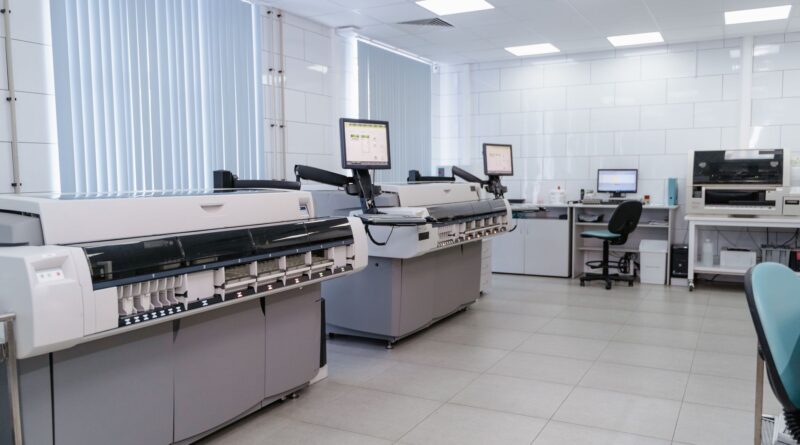
The process works in a continuous loop. First, an AI model comes up with a new biological design, such as a unique protein or a genetic instruction. Then, automated robotic systems in a lab create and test that design in the real world. The results, whether they are successes or failures, are immediately sent back to the AI. This constant feedback allows the AI to learn from its mistakes and get smarter with each cycle, rapidly improving its understanding of how biology works.
Analysis: The ‘Self-Driving’ Laboratory
This new model is a major step forward. In the past, biological research was often a slow process of trial and error. A scientist would form a hypothesis, run an experiment, and analyze the results, a cycle that could take months or even years. This new accelerator changes the game by using AI to drive discovery.
Think of it as a “self-driving laboratory.” The AI acts as the driver, exploring the vast, complex world of biological possibilities. The automated lab is the car, carrying out the experiments and sending back real-world data like a car’s sensors. This combination allows researchers to test thousands of ideas at a speed that was once unimaginable. It moves beyond human intuition to find surprising and effective solutions that we might never have thought of on our own.
What Can It Create? From Medicine to Materials
The potential applications are vast and could have a major impact on our lives. In medicine, this system could dramatically speed up the creation of new drugs. For example, it could design highly targeted proteins to fight cancer or custom enzymes to repair damaged cells. The number of potential new therapies is huge, though specific development figures are not yet confirmed.
Beyond medicine, it could revolutionize materials science. The accelerator could be used to invent new materials inspired by nature, like self-healing plastics that repair themselves like skin, or ultra-efficient molecules for solar panels that mimic photosynthesis in leaves. In agriculture, it could help design crops that are more resistant to drought and disease, helping to secure the global food supply.
Why This Matters for the Future
This initiative is a key part of an exciting new field called “generative biology.” Similar to how generative AI can create new images, text, or music, generative biology aims to create new, functional biological systems from scratch. By learning the deep-seated ‘grammar’ of biology, the ultimate goal is not just to copy what nature does, but to innovate with it. By understanding nature’s design rules, we can create solutions that work in harmony with the environment. This could unlock answers to some of humanity’s biggest problems, from developing carbon-neutral manufacturing to cleaning up pollution and fighting incurable diseases.
📌 Key Questions Answered
What is an AI BioDesign accelerator?
It is a system that combines artificial intelligence with automated experimental biology to rapidly design, test, and learn about biological systems.
What is the primary goal of this new accelerator?
The main goal is to learn the fundamental ‘design rules’ of nature by creating a high-speed feedback loop between AI-driven design and real-world lab results.
What are the potential applications of this technology?
Potential applications include accelerated drug discovery, the creation of new bio-inspired materials, and advancements in synthetic biology.
📚 Story Sources:
- New AI BioDesign accelerator combines experimental biology and artificial intelligence to learn nature’s design rules – EurekAlert! (news.google.com)
This article was synthesized by AI from the multiple sources above for educational and informational purposes.
Image Credit: Photo by Tima Miroshnichenko on Pexels
Pingback: Wyoming's AI Gambit: Can the Cowboy State Lead the Tech Revolution? - The Pivot News