
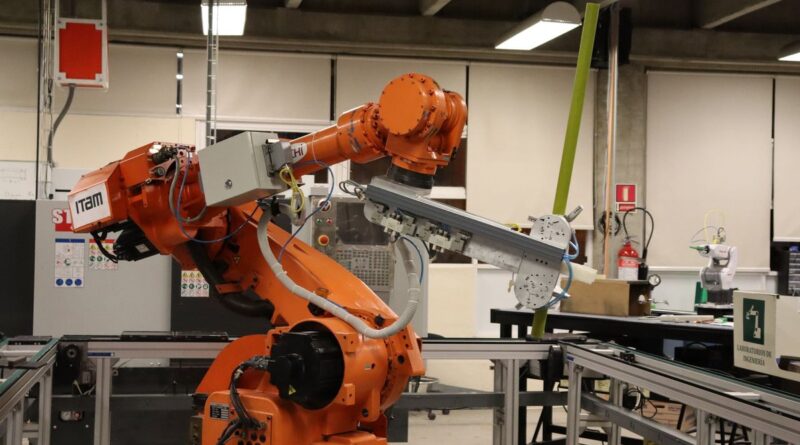
Robotics in Medicine: Georgia Tech and Emory’s Dual-Degree Program Reshaping Healthcare

Hostinger Cloud Hosting: Ultra-Fast NVMe Storage & 99.9% Uptime Guarantee
Power your high-traffic WordPress websites with managed cloud infrastructure, automated daily backups, free SSL, and 24/7 expert support.
📌 Key Takeaways
- Georgia Tech and Emory University partnered on a dual-degree program in medicine and robotics, bridging engineering and clinical practice.
- The program aims to develop professionals with expertise in both medical science and robotic systems to drive healthcare innovation.
- Graduates are uniquely prepared to advance fields like robotic surgery, AI diagnostics, and assistive healthcare technologies.
- This interdisciplinary educational model highlights a global trend towards specialized training to address complex societal challenges in healthcare.
Robotics in Medicine: Georgia Tech and Emory’s Dual-Degree Program Reshaping Healthcare
In a foresightful move that continues to shape the future of healthcare, Georgia Institute of Technology and Emory University established a pioneering dual-degree program in medicine and robotics in recent years. This interdisciplinary initiative, first announced to foster a new generation of medical professionals, has become increasingly relevant as technological integration deepens within clinical practice.
The collaboration between Georgia Tech, a global leader in engineering and robotics, and Emory University, renowned for its medical research and clinical excellence, was designed to bridge the historical gap between advanced technological development and its practical application in patient care. The program aims to equip graduates with a profound understanding of both complex medical science and sophisticated robotic systems, preparing them for roles at the vanguard of medical innovation.
Key Insights: The Convergence of Care and Code
This dual-degree program signifies a critical recognition of the evolving demands in healthcare. As surgical robots become more precise, diagnostic AI more prevalent, and assistive technologies more sophisticated, medical practitioners require not just an understanding of these tools, but the ability to innovate and refine them. Analysts suggest that such integrated curricula are vital for addressing the ethical, technical, and practical challenges of deploying advanced robotics in sensitive medical environments.
The program’s graduates are uniquely positioned to lead developments in areas such as minimally invasive surgery, prosthetics, rehabilitation robotics, and AI-driven diagnostic tools. By merging clinical expertise with engineering prowess, they can design solutions that are not only technologically advanced but also deeply empathetic to patient needs and clinical workflows. This holistic approach ensures that advancements in robotics are seamlessly integrated into patient care pathways, rather than remaining isolated technological marvels.
Why This Matters in the Long Run
The foresight shown by Georgia Tech and Emory University in launching this program reflects a broader global trend towards specialized, interdisciplinary education. As of late 2026, the demand for professionals who can navigate both the complexities of human biology and the intricacies of advanced machinery is accelerating. This program serves as a blueprint for other institutions globally, highlighting the necessity of breaking down traditional academic silos to address complex societal challenges. Its graduates are poised to accelerate breakthroughs in personalized medicine, enhance surgical precision, and improve patient outcomes on a global scale, fundamentally altering how medical care is delivered and conceived over the next few decades.
The ongoing success and evolution of the Georgia Tech-Emory dual-degree program underscore the transformative power of academic partnerships in driving innovation. It stands as a testament to the idea that the most impactful solutions often emerge at the intersection of diverse fields.
📌 Key Questions Answered
What is the core purpose of the Georgia Tech and Emory dual-degree program?
The program aims to equip graduates with a deep understanding of both complex medical science and sophisticated robotic systems, preparing them to innovate at the intersection of medicine and technology.
Which institutions are involved in this dual-degree partnership?
The partnership is a collaboration between Georgia Institute of Technology, known for its engineering and robotics, and Emory University, recognized for its medical research and clinical excellence.
What fields are graduates of this program expected to impact?
Graduates are expected to lead developments in areas such as minimally invasive surgery, prosthetics, rehabilitation robotics, and AI-driven diagnostic tools, enhancing patient care.
📚 Story Sources:
- Georgia Tech, Emory Partner on Medicine and Robotics Dual-Degree Program – Georgia Institute of Technology (news.google.com)
The source reports the announcement of the partnership for a dual-degree program between Georgia Tech and Emory, focusing on the establishment of this new educational initiative.
This article was synthesized by AI from the multiple sources above for educational and informational purposes.
Image Credit: Photo by Diego Martinez on Pexels
Pingback: Georgia Tech, Emory’s Robotics-Medicine Dual Degree: A 2026 Retrospective - The Pivot News