
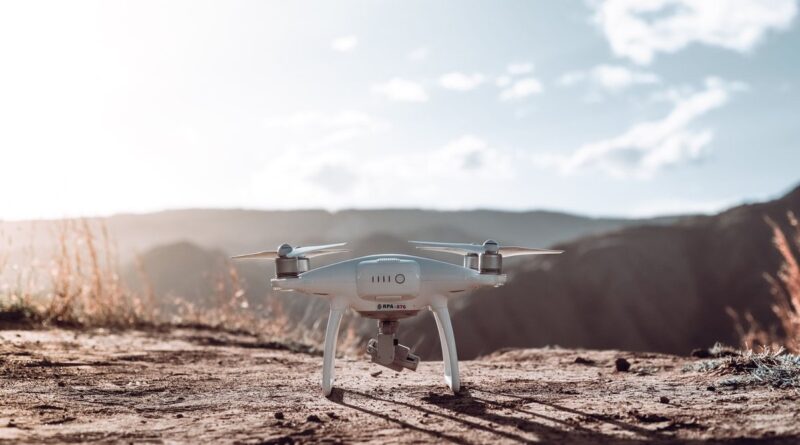
Vigilant Aerospace Named Top 4 Robotics Innovator by Fast Company in 2026 Awards

Hostinger Cloud Hosting: Ultra-Fast NVMe Storage & 99.9% Uptime Guarantee
Power your high-traffic WordPress websites with managed cloud infrastructure, automated daily backups, free SSL, and 24/7 expert support.
📌 Key Takeaways
- Vigilant Aerospace was named a Top 4 Robotics and Automation Company by Fast Company.
- The recognition comes from Fast Company’s prestigious 2026 Next Big Things in Tech Awards.
- The company is acknowledged for its pioneering advancements in autonomous flight and airspace management.
- This positions Vigilant Aerospace as a key innovator shaping the future of autonomous systems and air logistics.
Vigilant Aerospace Named Top 4 Robotics Innovator by Fast Company in 2026 Awards
Vigilant Aerospace’s recognition as a top robotics and automation company by Fast Company marks a significant milestone in the rapidly advancing autonomous systems industry, underscoring the critical role of sophisticated airspace management in future technologies.
On October 9, 2026, Vigilant Aerospace was officially named a Top 4 Robotics and Automation Company in Fast Company’s prestigious 2026 Next Big Things in Tech Awards. This esteemed accolade, as reported by sUAS News, highlights the company’s pioneering advancements in autonomous flight and integrated airspace management solutions. The recognition positions Vigilant Aerospace as a pivotal innovator within a sector poised for exponential growth and transformative impact.
Key Analysis: Shaping the Autonomous Future
The inclusion of Vigilant Aerospace in Fast Company’s “Next Big Things in Tech” list is more than just an award; it is an affirmation of the company’s foundational contribution to the safe and efficient integration of autonomous aerial vehicles into global airspace. The “why” behind this recognition lies in the increasing demand for robust, reliable, and scalable solutions that can manage complex air traffic scenarios involving thousands of drones and other uncrewed aircraft.
As industry observers note, the proliferation of drone delivery services, the nascent development of Urban Air Mobility (UAM), and the automation of industrial inspections and logistics all hinge on advanced airspace management systems. Vigilant Aerospace’s technology, which focuses on collision avoidance and dynamic airspace deconfliction, addresses a core challenge: how to ensure safety and regulatory compliance when autonomous systems operate beyond visual line of sight. This innovation is crucial for unlocking the economic potential of the autonomous sector, which, according to various market analyses, is projected to reach hundreds of billions of dollars globally by the end of the decade.
Expert Insights: The Nexus of AI and Airspace
Analysts suggest that Vigilant Aerospace’s success stems from its adept integration of artificial intelligence and machine learning into real-time decision-making for autonomous systems. The ability to predict potential conflicts, analyze complex flight data, and issue proactive commands to uncrewed aircraft is paramount. Research conducted by institutions like the MIT Aeronautics and Astronautics department consistently emphasizes the need for highly adaptive and predictive algorithms to manage future air traffic, especially in shared airspace where crewed and uncrewed aircraft coexist. Vigilant Aerospace’s solutions directly contribute to this paradigm shift, moving towards fully automated, AI-driven air traffic control systems.
Beyond the technological prowess, the societal implications are profound. While autonomous systems promise increased efficiency, reduced operational costs, and access to remote areas, they also introduce complex ethical considerations, particularly concerning data privacy, the accountability of autonomous decisions, and the need for robust cybersecurity measures. Companies like Vigilant Aerospace are at the forefront of developing secure and ethical frameworks for these technologies, often collaborating with regulatory bodies to shape future aviation policies.
Why This Matters in the Long Run: The Sky is No Longer the Limit
Vigilant Aerospace’s recognition signifies a broader trend towards the industrialization of autonomous flight. In the long run, their advancements are not merely about better drones, but about enabling an entirely new layer of economic activity and infrastructure in the lower airspace. This includes everything from automated package delivery transforming urban logistics to precision agriculture and critical infrastructure monitoring in remote regions. The development of sophisticated, AI-powered airspace management systems is a foundational step towards a future where autonomous aerial vehicles are as commonplace and safely integrated as ground vehicles are today. This evolution will necessitate continuous innovation in areas like sensor fusion, predictive analytics, and resilient communication networks, all areas where Vigilant Aerospace is making significant strides.
The company’s standing in the 2026 Fast Company awards is a clear indicator of its potential to define the operational standards and safety protocols for the next generation of air travel and logistics.
📌 Key Questions Answered
What award did Vigilant Aerospace receive?
Vigilant Aerospace was named a Top 4 Robotics and Automation Company in Fast Company’s 2026 Next Big Things in Tech Awards.
Which publication recognized Vigilant Aerospace?
Fast Company, a prominent business media brand, recognized Vigilant Aerospace in its 2026 Next Big Things in Tech Awards.
What category was Vigilant Aerospace recognized in?
Vigilant Aerospace was recognized in the Robotics and Automation category.
📚 Story Sources:
- Vigilant Aerospace Named as Top 4 Robotics and Automation Company in Fast Company’s 2026 Next Big Things in Tech Awards – sUAS News (news.google.com)
Reported the official announcement of Vigilant Aerospace's recognition by Fast Company, focusing on its significance within the unmanned aerial systems industry.
This article was synthesized by AI from the multiple sources above for educational and informational purposes.
Image Credit: Photo by Luis Quintero on Pexels