
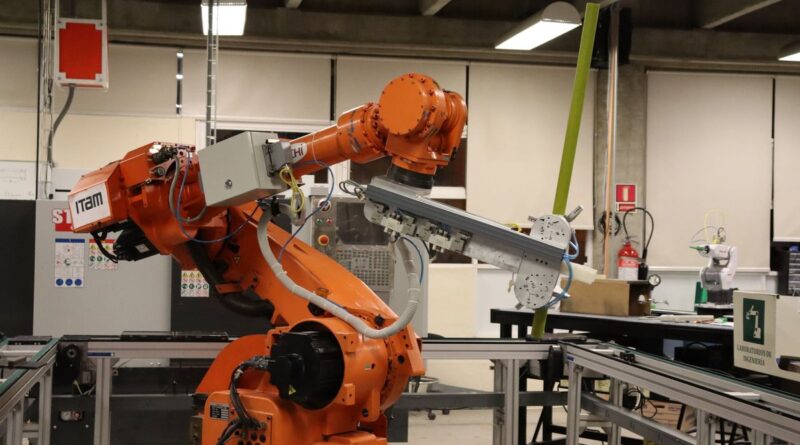
Dual-Degree Revolution: Medicine and Robotics Converge at Georgia Tech, Emory

Hostinger Cloud Hosting: Ultra-Fast NVMe Storage & 99.9% Uptime Guarantee
Power your high-traffic WordPress websites with managed cloud infrastructure, automated daily backups, free SSL, and 24/7 expert support.
📌 Key Takeaways
- Georgia Tech and Emory University established a dual-degree program in medicine and robotics a few years prior to October 2026.
- The program aims to train professionals in integrating advanced robotic technologies into clinical practice and medical research.
- This initiative addresses the growing demand for interdisciplinary expertise in the rapidly evolving field of medical technology.
- The collaboration signifies a pivotal shift in higher education's response to technological integration in critical sectors like healthcare.
Dual-Degree Revolution: Medicine and Robotics Converge at Georgia Tech, Emory
The convergence of medicine and advanced robotics, once a futuristic concept, has solidified into a foundational pillar of specialized education, exemplified by a pioneering dual-degree program launched a few years prior to today’s date, October 11, 2026.
A few years prior to today’s date, October 11, 2026, the Georgia Institute of Technology and Emory University collaboratively established an innovative dual-degree program focusing on medicine and robotics. This initiative, based in Atlanta, was designed to cultivate a new generation of professionals adept at integrating advanced robotic technologies into clinical practice and medical research, addressing a critical emerging need in healthcare, as reported by the Georgia Institute of Technology.
Key Analysis: Forging the Future of Healthcare Professionals
This inter-institutional partnership between a leading engineering powerhouse and a renowned medical institution underscored a growing recognition in the mid-2020s that future medical breakthroughs would increasingly rely on interdisciplinary expertise. The traditional silos between engineering and medicine were proving insufficient to tackle complex challenges such as precision surgery, advanced prosthetics, rehabilitative robotics, and AI-powered diagnostic tools. The program aimed to bridge this gap by creating graduates fluent in both the intricacies of human physiology and the mechanics of sophisticated autonomous systems.
Industry observers noted that the rapid advancement of robotic-assisted surgery and AI-powered diagnostics created a significant demand for clinicians who not only understood medical science but also possessed a deep comprehension of robotic systems, control algorithms, and human-robot interaction. The Georgia Tech-Emory collaboration aimed to directly address this critical workforce gap, positioning its graduates at the forefront of medical innovation. Furthermore, the program’s design, blending the technical rigor of Georgia Tech with Emory’s medical and ethical expertise, fostered early discussions on the societal impact and ethical considerations of deploying autonomous and semi-autonomous systems in healthcare. This foresight was crucial as regulatory bodies and public perception began grappling with the implications of increasingly intelligent machines in patient care.
Why This Matters in the Long Run
The establishment of such specialized dual-degree programs in the mid-2020s marked a pivotal shift in higher education’s response to the accelerating pace of technological integration in critical sectors. These initiatives are not merely academic offerings; they are foundational investments in the infrastructure of future healthcare, shaping the capabilities of medical professionals and driving the evolution of patient care towards more precise, efficient, and technologically augmented paradigms. They set a precedent for how universities must adapt to produce graduates capable of navigating and innovating within rapidly converging fields, ensuring that the human element remains central even as technology advances.
Such forward-thinking educational models are indispensable for navigating the complexities and harnessing the potential of the coming decades, ensuring that medical progress is not only technologically advanced but also ethically sound and human-centric.
📌 Key Questions Answered
What institutions partnered to create the dual-degree program?
The Georgia Institute of Technology and Emory University partnered to create this innovative dual-degree program.
What is the focus of the dual-degree program?
The program focuses on medicine and robotics, aiming to integrate advanced robotic technologies into clinical practice and medical research.
Where is this dual-degree program located?
The program is based in Atlanta, Georgia.
📚 Story Sources:
- Georgia Tech, Emory Partner on Medicine and Robotics Dual-Degree Program – Georgia Institute of Technology (news.google.com)
The Georgia Institute of Technology reported on the launch of the dual-degree program with Emory, highlighting the collaborative effort and the program's focus on integrating medicine and robotics.
This article was synthesized by AI from the multiple sources above for educational and informational purposes.
Image Credit: Photo by Diego Martinez on Pexels