
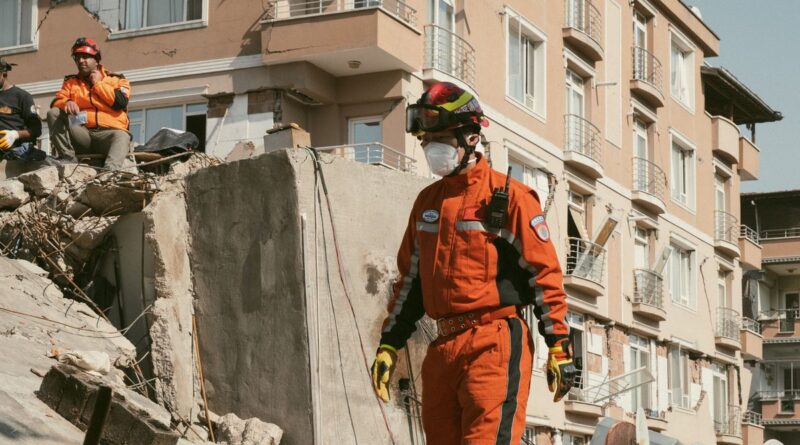
AI, Drones, and Robotics: Reshaping Emergency Response in 2026

Hostinger Cloud Hosting: Ultra-Fast NVMe Storage & 99.9% Uptime Guarantee
Power your high-traffic WordPress websites with managed cloud infrastructure, automated daily backups, free SSL, and 24/7 expert support.
📌 Key Takeaways
- AI, drones, and robotics are fundamentally transforming fire and rescue operations by 2026.
- FireRescue1 highlighted in 2024 that these technologies were 'redefining what's possible' for emergency services.
- These tools enhance situational awareness, optimize resource deployment, and significantly improve safety for first responders.
- The widespread adoption necessitates ongoing discussions regarding data privacy, algorithmic bias, and ethical deployment.
In 2024, industry publication FireRescue1 astutely observed that artificial intelligence (AI), drones, and robotics were “redefining what’s possible” within fire and rescue operations. As of October 13, 2026, this declaration has not only been substantiated but has become a foundational truth in emergency response worldwide. The initial insights reported by FireRescue1 marked a pivotal moment, signaling a paradigm shift from traditional methods to a technologically augmented future for first responders.
The Evolution of Emergency Response Technologies
Two years ago, the integration of advanced technologies into public safety was still gaining widespread traction; today, it is indispensable. Drones, once primarily surveillance tools, now serve as frontline scouts, providing real-time aerial intelligence in hazardous environments. Equipped with thermal imaging and gas sensors, these unmanned aerial vehicles (UAVs) offer critical situational awareness, locating victims in collapsed structures or mapping wildfire perimeters without risking human lives. Robotics, ranging from remote-controlled vehicles for hazardous material handling to autonomous ground units assisting with search and rescue, have similarly evolved from experimental prototypes to essential assets.
The true force multiplier, however, remains artificial intelligence. AI fire rescue applications, as anticipated in earlier reports, now analyze vast datasets from drones, sensors, and historical incidents to predict fire propagation, optimize resource deployment, and even identify high-risk areas for proactive intervention. Algorithms process complex variables faster than human teams, enabling more informed and decisive actions during critical moments. This symbiotic relationship between human expertise and machine efficiency is precisely what FireRescue1 foreshadowed, transforming incident command and operational execution.
Key Analysis: Societal Impact and Ethical Considerations
The widespread adoption of AI, drones, and robotics in emergency services, as highlighted by FireRescue1’s 2024 analysis, carries profound societal implications. On one hand, these technologies demonstrably enhance public safety, reducing response times, minimizing casualties, and protecting first responders. The ability to deploy autonomous units into situations too dangerous for humans represents an invaluable advancement in occupational safety. On the other hand, the rapid integration has necessitated rigorous discussions around data privacy, algorithmic bias, and the ethical boundaries of automated decision-making in life-or-death scenarios. Global labs and universities, including institutions like Stanford and MIT, have been at the forefront of developing ethical frameworks and robust validation protocols to ensure these technologies serve humanity responsibly.
Why This Matters in the Long Run
The trajectory identified by FireRescue1 in 2024 underscores a fundamental shift in how societies approach crisis management. In the long run, the continued refinement and integration of AI, drones, and robotics will not only make emergency services more efficient but will fundamentally alter urban planning, disaster preparedness, and even architectural design. Future cities may incorporate embedded sensor networks and autonomous response systems, creating a resilient infrastructure capable of mitigating risks proactively. This ongoing technological pivot promises a future where the impossible scenarios of yesterday become manageable realities, fostering a safer, more responsive global community.
The journey from innovative concept to indispensable reality for AI, drones, and robotics in fire and rescue continues, building on the foundational insights reported by industry leaders like FireRescue1.
📌 Key Questions Answered
What technologies are redefining fire and rescue operations as of 2026?
Artificial intelligence (AI), drones, and robotics are the key technologies fundamentally redefining fire and rescue operations.
What was FireRescue1's observation regarding these technologies in 2024?
FireRescue1 observed in 2024 that these technologies were 'redefining what's possible' within fire and rescue operations.
How do these technologies generally impact emergency response?
They enhance situational awareness, optimize resource deployment, improve safety for first responders, and enable more informed decision-making during critical incidents.
📚 Story Sources:
- Artificial intelligence, drones and robotics are redefining what’s possible – FireRescue1 (news.google.com)
This article was synthesized by AI from the multiple sources above for educational and informational purposes.
Image Credit: Photo by Doruk Aksel Anıl on Pexels