
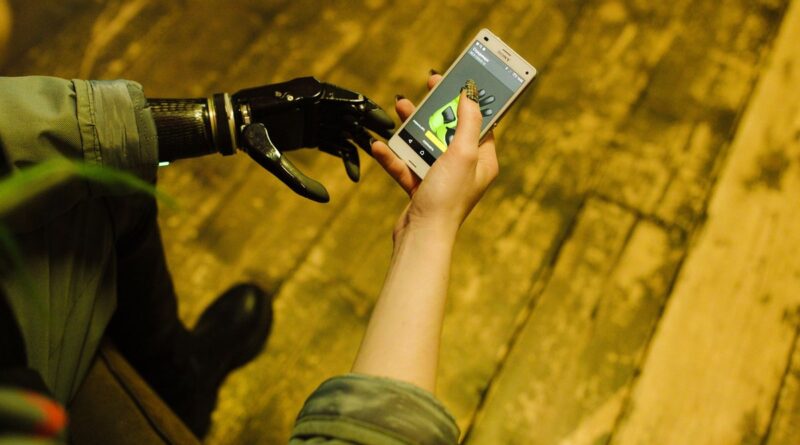
Redefining Autonomy: AI, Robotics, and Neural Interfaces Reshape Independence

Hostinger Cloud Hosting: Ultra-Fast NVMe Storage & 99.9% Uptime Guarantee
Power your high-traffic WordPress websites with managed cloud infrastructure, automated daily backups, free SSL, and 24/7 expert support.
📌 Key Takeaways
- AI, robotics, and neural interfaces are converging to fundamentally redefine human independence by 2026.
- These technologies empower individuals by mitigating cognitive and physical limitations through intelligent assistance, physical support, and direct brain-device control.
- The societal integration of these advancements raises critical ethical questions concerning data privacy, algorithmic bias, and equitable access to technology.
- In the long run, this trend will necessitate re-evaluating societal structures, education, and healthcare as human capabilities are continuously augmented.
Redefining Autonomy: AI, Robotics, and Neural Interfaces Reshape Independence
By late 2026, the convergence of Artificial Intelligence (AI), advanced robotics, and sophisticated neural interfaces is fundamentally transforming the very definition of human independence, extending capabilities and autonomy across diverse societal sectors. This technological synergy is not merely augmenting human potential but actively re-scripting the narrative of self-reliance, challenging traditional limitations, and opening new frontiers for individual empowerment.
The discussion, highlighted by publications like the Hindustan Times, centers on how these technologies are moving beyond theoretical applications into tangible, real-world solutions. From personalized AI assistants managing complex daily schedules to robotic exoskeletons restoring mobility, and brain-computer interfaces (BCIs) enabling direct control over digital and physical environments, the shift is profound. This evolution signifies a pivotal moment where technology serves not just as a tool, but as an integral partner in achieving greater personal and professional autonomy for millions globally.
Key Analysis: The Pillars of Enhanced Independence
The transformative power of these technologies stems from their ability to address both cognitive and physical limitations, creating unprecedented levels of independence. AI, with its capacity for complex data processing and predictive analytics, is increasingly embedded in assistive technologies. These range from intelligent prosthetic limbs that learn user gait patterns to AI-driven navigation systems for visually impaired individuals, providing real-time environmental awareness. Leading research institutions, including MIT and Stanford, continue to push the boundaries of AI’s role in personalized care and decision support systems, making independent living more accessible.
Robotics, particularly in the form of collaborative robots (cobots) and advanced prosthetics, are redefining physical independence. Beyond industrial applications, consumer-grade robotics are now entering homes, assisting with daily chores, personal care, and mobility. For individuals with severe physical disabilities, robotic suits and advanced wheelchairs are restoring levels of movement and interaction previously thought impossible. Concurrently, neural interfaces, such as those developed by companies like Neuralink and research initiatives at institutions like the University of California, San Francisco, offer direct communication pathways between the human brain and external devices. These BCIs are enabling paralyzed individuals to control computers, robotic arms, and even communicate with unprecedented speed and precision, offering a direct pathway to digital and physical agency.
Societal and Ethical Implications
While the benefits are clear, the rapid integration of these technologies also prompts critical societal and ethical considerations. Questions surrounding data privacy, algorithmic bias in AI systems, and the equitable distribution of advanced robotic and neural interface technologies are paramount. Ensuring that these advancements do not exacerbate existing inequalities, but rather serve to uplift all segments of society, remains a key challenge for policymakers and innovators. Regulatory frameworks are actively being debated in regions like the EU and the US to balance innovation with protection, ensuring responsible development and deployment.
Why This Matters in the Long Run
The ongoing redefinition of independence by AI, robotics, and neural interfaces will shape the future of human potential and societal structure for decades to come. This trend points towards a future where human limitations, whether physical or cognitive, are increasingly mitigated by technology, fostering a more inclusive and capable global population. It will necessitate a re-evaluation of educational systems, labor markets, and healthcare delivery, pushing humanity towards a new era of augmented existence where the boundaries of individual capability are continuously expanded.
As these technologies mature, the ultimate measure of their success will be their capacity to empower individuals, foster genuine autonomy, and enhance the human experience in meaningful, equitable ways.
📌 Key Questions Answered
How do AI and robotics contribute to independence?
AI systems provide intelligent assistance for daily tasks and decision-making, while robotics offer physical support and automate labor, allowing individuals greater autonomy and overcoming physical limitations.
What role do neural interfaces play in enhancing independence?
Neural interfaces enable direct communication between the human brain and external devices, allowing individuals, particularly those with paralysis, to control computers and robotic systems with thought, greatly expanding their agency.
What are the primary ethical considerations regarding these technologies?
Key ethical considerations include data privacy, potential algorithmic bias in AI systems, and ensuring equitable access to advanced robotic and neural interface technologies to prevent exacerbating societal inequalities.
📚 Story Sources:
- How AI, robotics and neural interfaces are redefining independence | Hindustan Times – Hindustan Times (news.google.com)
This article was synthesized by AI from the multiple sources above for educational and informational purposes.
Image Credit: Photo by Yaroslav Shuraev on Pexels