
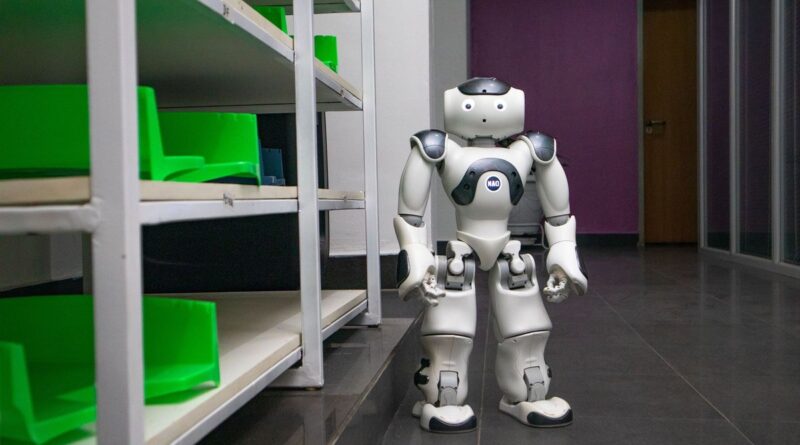
Google’s AI Doctor: Critical for NASA’s Mars Ambitions by 2026

Hostinger Cloud Hosting: Ultra-Fast NVMe Storage & 99.9% Uptime Guarantee
Power your high-traffic WordPress websites with managed cloud infrastructure, automated daily backups, free SSL, and 24/7 expert support.
📌 Key Takeaways
- Google is developing an AI-powered robotic doctor for NASA to support the Artemis mission's progression towards Mars.
- This AI doctor aims to provide autonomous medical care, addressing the challenges of long-duration space travel and communication delays with Earth.
- The initiative leverages Google's advanced AI capabilities in diagnostics and robotics for extraterrestrial healthcare.
- This development signifies a crucial step towards human self-sufficiency in deep space exploration and has potential implications for terrestrial healthcare.
Google’s AI Doctor: Critical for NASA’s Mars Ambitions by 2026
As the Artemis program continues its methodical advance beyond lunar exploration towards crewed missions to Mars, a critical technological pillar is emerging: autonomous medical care. Reports from The Times of India indicate that Google is actively developing an AI-powered robotic doctor for NASA, a development poised to redefine long-duration space travel medicine.
This initiative directly addresses one of the most formidable challenges of interplanetary missions: providing comprehensive, real-time medical support thousands of light-seconds away from Earth. With communication delays to Mars ranging from 3 to 22 minutes one-way, traditional telemedicine models become impractical for acute medical emergencies. Google’s involvement signifies a strategic convergence of advanced AI, robotics, and aerospace medicine, aiming to equip future Martian explorers with an on-board, intelligent diagnostic and treatment system.
Key Analysis: AI’s Role in Extraterrestrial Healthcare
The imperative for an autonomous medical system on Mars missions stems from several factors. Firstly, the sheer distance and communication latency preclude immediate human intervention from Earth-based medical teams. Secondly, the physiological stressors of prolonged microgravity, radiation exposure, and altered circadian rhythms in deep space introduce unique health risks, from bone density loss and muscle atrophy to increased cancer risk and psychological strain.
Industry observers note that Google’s expertise in large language models (LLMs), diagnostic AI, and robotic integration positions it uniquely for this endeavor. The envisioned robot doctor would likely integrate multimodal data—from astronaut vital signs and environmental sensors to genetic predispositions and real-time symptom reporting—to provide diagnoses, recommend treatments, and potentially even perform minor surgical procedures under AI guidance. This level of autonomy requires not only sophisticated diagnostic algorithms but also robust ethical frameworks and fail-safe protocols to ensure astronaut safety.
The Societal and Market Implications
The development of such an advanced AI medical system for space has profound implications beyond NASA’s immediate mission objectives. The rigorous testing and validation required for space applications could accelerate the deployment of similar autonomous diagnostic and surgical AI in terrestrial healthcare, particularly in remote or underserved regions. This could democratize access to high-quality medical care, reducing reliance on geographically constrained human specialists.
Furthermore, the project highlights a growing trend of private sector technological giants becoming integral partners in national space programs. This collaboration fosters innovation, leveraging commercial-scale R&D capabilities for public sector exploration goals. The global market for AI in healthcare, already experiencing rapid growth, stands to gain significant advancements and credibility from such high-stakes, high-profile applications.
Why This Matters in the Long Run
The integration of a Google-built robot doctor into NASA’s Artemis mission architecture represents more than just a technological upgrade; it signifies a fundamental shift in how humanity approaches long-duration, high-risk exploration. It acknowledges the limitations of human reliance in extreme environments and embraces AI as a necessary, integral partner for survival and success. This development lays crucial groundwork not only for establishing a human presence on Mars but also for future interstellar travel, where self-sufficiency and autonomous systems will be paramount. It underscores a future where AI is not merely a tool but a critical crew member, enabling the next giant leap for humankind.
Conclusion
Google’s collaboration with NASA on an AI-powered robot doctor is a landmark step towards making crewed missions to Mars a sustainable reality, pushing the boundaries of autonomous systems in the most demanding environments imaginable.
📌 Key Questions Answered
Why is Google developing a robot doctor for NASA?
Google is developing an AI-powered robot doctor to address the significant medical challenges of long-duration space travel, particularly for NASA's Artemis mission as it advances from the Moon to Mars, where communication delays make Earth-based medical intervention impractical.
What is the primary purpose of this robot doctor for the Artemis mission?
The primary purpose is to provide autonomous, real-time medical support to astronauts on Mars missions, offering diagnostic capabilities and potentially treatment options far from Earth, where communication latency is a major obstacle.
What kind of expertise does Google bring to this project?
Google's expertise in large language models, diagnostic AI, and robotic integration makes it well-suited to develop a sophisticated AI medical system capable of multimodal data analysis for extraterrestrial healthcare.
📚 Story Sources:
- Google is building a robot doctor for NASA, as Artemis mission advances from Moon to Mars, and says it wi – The Times of India (news.google.com)
This source briefly reports on Google's involvement in building a robot doctor for NASA's Mars-bound Artemis mission, highlighting the advancement of space exploration.
This article was synthesized by AI from the multiple sources above for educational and informational purposes.
Image Credit: Photo by Tope J. Asokere on Pexels