
Robotics in Hospitality: APEC’s Humanoid Servers Paved the Way for Future Service Automation

Hostinger Cloud Hosting: Ultra-Fast NVMe Storage & 99.9% Uptime Guarantee
Power your high-traffic WordPress websites with managed cloud infrastructure, automated daily backups, free SSL, and 24/7 expert support.
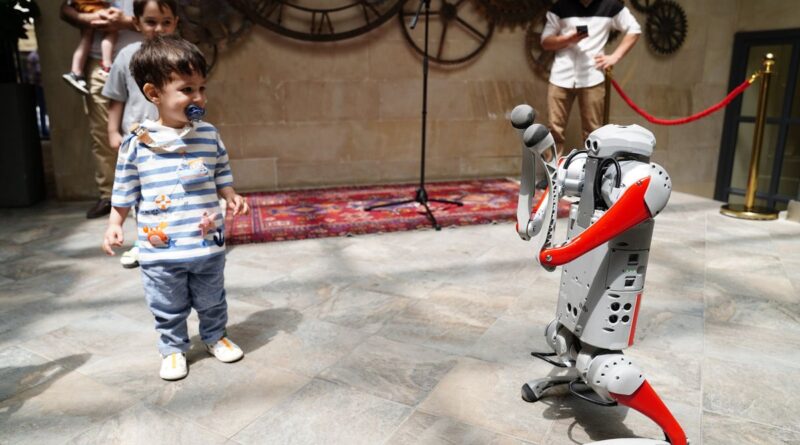
In a glimpse of future hospitality, humanoid robots served coffee and ice cream at the International Media Center during a previous APEC Economic Leaders’ Meeting in Shenzhen, China. This event, captured and shared by Jervis Manahan of ABS-CBN News, underscored the accelerating integration of advanced robotics into public-facing service roles, a trend that continues to evolve rapidly as of November 2026.
The deployment, while seemingly a novelty at the time, represented a significant public demonstration of China’s advancements in artificial intelligence and robotics. Shenzhen, a global hub for technological innovation, provided a fitting backdrop for showcasing these capabilities to an international audience of media professionals. The robots, designed for interaction and service, seamlessly delivered refreshments, offering a tangible example of how automated systems could enhance efficiency and experience in high-volume environments.
The Evolution of Service Robotics
The use of humanoid robots in hospitality sectors has moved beyond mere exhibition since that APEC event. Today, across various industries, robots are increasingly performing repetitive tasks, from food preparation to concierge services. This shift is driven by advancements in artificial intelligence, particularly in areas like natural language processing and computer vision, enabling robots to understand and respond to human cues with greater sophistication. While the APEC deployment focused on basic serving, contemporary service robots are now capable of more complex interactions, managing inventory, and even performing light cleaning duties, according to reports from industry analysts.
The global market for service robots, as projected by various research firms including IDC and Gartner, continues its upward trajectory, with significant investment from both private and public sectors. Countries like China, Japan, and South Korea are at the forefront of this adoption, integrating robotics into their economic strategies to address labor shortages and boost productivity. Ethical considerations, such as job displacement and the quality of human-robot interaction, remain central to ongoing discussions in academic institutions like Stanford’s Human-Robot Interaction Lab and MIT’s Computer Science and Artificial Intelligence Laboratory (CSAIL).
Key Analysis: China’s Robotics Ambition
The APEC demonstration in Shenzhen was not an isolated incident but rather a strategic move within China’s broader national plan to become a global leader in AI and robotics. By deploying these robots at a high-profile international event, China effectively showcased its technological prowess and commitment to innovation. This public display served to normalize the presence of advanced automation in daily life and subtly positioned China as a key player in shaping the future of service industries. Analysts suggest such initiatives are crucial for fostering domestic development and attracting international partnerships in robotics research and manufacturing.
Why This Matters in the Long Run
The appearance of humanoid robots serving dignitaries and media at a major international summit like APEC signifies a critical turning point in the public perception and practical application of AI. It marked a transition from abstract technological concepts to tangible, interactive experiences. In the long run, such deployments accelerate the mainstream adoption of robotics, influencing urban planning, workforce development strategies, and consumer expectations. As these technologies become more commonplace, societies will increasingly grapple with questions of automation’s role in human employment, the evolving nature of service, and the ethical frameworks required to govern intelligent machines.
The humble act of serving coffee and ice cream by a robot at an APEC meeting has, in hindsight, become a small yet potent symbol of a future where human-robot collaboration in service industries is not just a possibility, but an emerging reality.
📚 Story Sources:
This article was synthesized by AI from the multiple sources above for educational and informational purposes.
Image Credit: Photo by Tahir Xəlfəquliyev on Pexels