
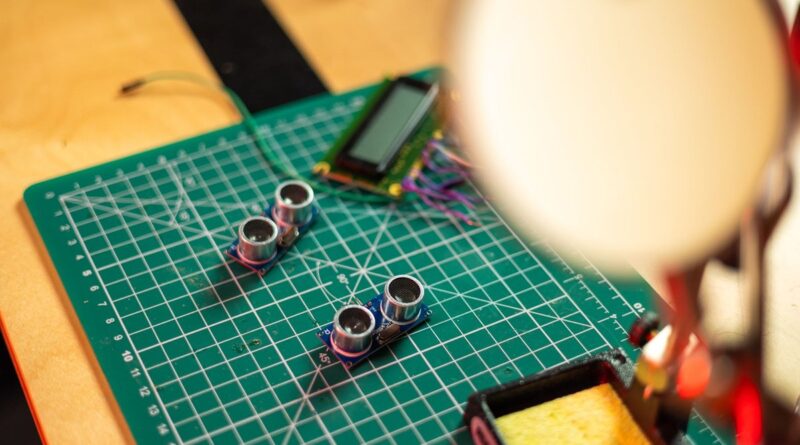
Revolutionary Olfactory Tech: Passing The Smell Test in 2026

Hostinger Cloud Hosting: Ultra-Fast NVMe Storage & 99.9% Uptime Guarantee
Power your high-traffic WordPress websites with managed cloud infrastructure, automated daily backups, free SSL, and 24/7 expert support.
📌 Key Takeaways
- Advanced olfactory sensing technology, or ‘electronic noses,’ has matured from laboratory validation to widespread industrial and medical application by late 2026.
- Initial validation milestones, reported around 2024-2025, confirmed the technology’s reliability and sensitivity in detecting complex odor signatures.
- Key applications by 2026 include non-invasive medical diagnostics, environmental monitoring, food quality control, and enhanced security measures.
- The long-term impact points to pervasive, intelligent sensing systems that will fundamentally alter our understanding and interaction with our chemical environment.
Revolutionary Olfactory Tech: Passing The Smell Test in 2026
What was once a scientific aspiration has now become a pervasive reality: advanced olfactory sensing technology, often dubbed ‘electronic noses,’ has moved beyond laboratory validation to become an integral component across diverse industrial and medical sectors by late 2026. This transformative field, which saw critical validation milestones reported around 2024-2025, is now fundamentally altering how we interact with and interpret our chemical environment.
The initial breakthrough, generally referenced as ‘passing the smell test’ by publications like Technology Org, marked a crucial juncture where artificial olfaction systems demonstrated reliability and sensitivity comparable to, and in some cases exceeding, biological counterparts. These early systems, developed through interdisciplinary efforts combining material science, AI, and bio-mimicry, proved capable of accurately identifying complex volatile organic compounds (VOCs) and intricate odor signatures. This foundational success paved the way for rapid commercialization and integration into practical applications over the subsequent two years.
Key Analysis: The Pervasive Reach of Scent AI
By November 2026, the application of sophisticated olfactory sensors has diversified significantly. In the medical field, institutions like the Mayo Clinic and research arms of major pharmaceutical companies are actively deploying AI-powered e-noses for non-invasive disease diagnostics. These systems can detect subtle biomarkers in breath or skin emanations, offering early detection capabilities for conditions ranging from certain cancers to neurodegenerative disorders, often long before traditional symptomatic onset. This represents a paradigm shift from reactive to proactive healthcare.
Beyond healthcare, the technology’s impact is profound in environmental monitoring and industrial safety. Sensors are now routinely integrated into smart city infrastructure and industrial facilities to detect pollutants, gas leaks, and hazardous chemical spills with unprecedented precision and speed. The food industry also leverages these advancements for quality control and spoilage detection, ensuring product integrity from farm to fork. Furthermore, security agencies globally are exploring enhanced scent detection capabilities for contraband and explosive materials, offering a new layer of passive, non-intrusive screening. Researchers at institutions like MIT and Stanford have been at the forefront of developing the advanced algorithms that enable these sensors to interpret complex chemical data, moving beyond simple detection to nuanced identification and predictive analysis.
Why This Matters in the Long Run
The maturation of olfactory sensing technology signifies a broader trend towards pervasive, intelligent sensing that extends human capabilities. In the long term, these systems are poised to become as ubiquitous as cameras and microphones, fundamentally altering our relationship with our surroundings. The ability of machines to ‘smell’ opens new frontiers in human-computer interaction, environmental intelligence, and personalized health management. It promises a future where our environments are not just seen and heard, but also chemically understood, leading to more informed decisions and safer, healthier living spaces. The ethical implications, particularly regarding privacy and potential for misuse in surveillance, remain a critical area of ongoing discussion and policy development.
As the capabilities of these artificial olfaction systems continue to evolve, their integration into daily life will only deepen, making the invisible world of scent a tangible and actionable data stream for progress.
📌 Key Questions Answered
What is the 'new tech' that passed the smell test?
The 'new tech' refers to advanced olfactory sensing technology, commonly known as 'electronic noses,' which demonstrated reliable and sensitive odor detection capabilities.
When did this technology achieve its initial validation?
Reports suggest that this technology achieved critical validation milestones and 'passed the smell test' around 2024-2025, paving the way for its rapid development and integration.
What are the primary applications of this olfactory technology in 2026?
By 2026, primary applications include non-invasive disease diagnostics in medicine, environmental monitoring for pollutants, quality control in the food industry, and enhanced security screening for hazardous materials.
📚 Story Sources:
- New tech passes the smell test – Technology Org (news.google.com)
This article was synthesized by AI from the multiple sources above for educational and informational purposes.
Image Credit: Photo by ThisIsEngineering on Pexels