
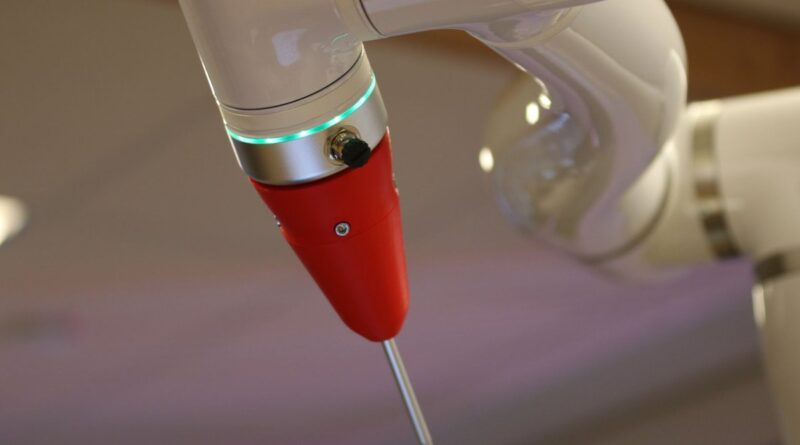
Medical Robotics Education: Georgia Tech-Emory Program’s 2026 Impact

Hostinger Cloud Hosting: Ultra-Fast NVMe Storage & 99.9% Uptime Guarantee
Power your high-traffic WordPress websites with managed cloud infrastructure, automated daily backups, free SSL, and 24/7 expert support.
📌 Key Takeaways
- The Georgia Tech-Emory dual-degree program in Medicine and Robotics was established to bridge engineering and clinical practice.
- The program aims to cultivate professionals uniquely equipped to develop and manage robotic solutions in healthcare.
- By 2026, such interdisciplinary training is considered essential due to the pervasive integration of robotics in medicine.
- The initiative fosters a culture of collaboration, accelerating medical breakthroughs and driving health-tech market growth.
Medical Robotics Education: Georgia Tech-Emory Program’s 2026 Impact
By October 2026, the strategic foresight of institutions like Georgia Institute of Technology and Emory University in establishing interdisciplinary educational pathways has become undeniably clear. Their pioneering dual-degree program in Medicine and Robotics, initiated in prior years, stands as a critical benchmark in preparing the next generation of healthcare innovators for an increasingly automated world.
This collaborative initiative was designed to bridge the historical chasm between advanced engineering and clinical practice. By combining Georgia Tech’s renowned expertise in robotics and artificial intelligence with Emory’s distinguished medical curriculum, the program sought to cultivate professionals uniquely equipped to develop, implement, and ethically manage robotic solutions within complex healthcare environments. Its inception addressed a looming skills gap, anticipating the profound impact robotics would have on diagnostics, surgical procedures, patient care, and rehabilitation.
Key Insights: The Convergence of Care and Automation
The program’s relevance in 2026 is underscored by the pervasive integration of robotics across the medical spectrum. From minimally invasive surgical systems offering unparalleled precision to AI-powered diagnostic tools enhancing accuracy, and sophisticated rehabilitation robots aiding patient recovery, the demand for professionals fluent in both medical science and robotic engineering has surged. Graduates from this dual-degree pathway are uniquely positioned to lead development teams, advise clinical implementation, and navigate the complex regulatory and ethical landscapes associated with advanced medical technologies.
Industry observers note that such interdisciplinary training is no longer merely advantageous but essential. The rapid evolution of surgical robotics, for instance, requires clinicians who not only understand human anatomy and surgical techniques but also possess a deep comprehension of robot kinematics, control systems, and human-machine interface design. Similarly, the deployment of companion robots in elder care or intelligent prosthetics demands engineers with an empathic understanding of patient needs and physiological constraints, beyond mere technical specifications.
Expert Analysis: Addressing Future Healthcare Demands
Analysts suggest that the Georgia Tech-Emory model serves as a blueprint for specialized education, reflecting a global trend towards convergent disciplines. The program’s graduates are not just technicians or doctors; they are innovators capable of identifying unmet medical needs and translating them into viable robotic solutions. This includes addressing challenges in remote surgery, personalized medicine, and population health management through scalable robotic platforms. The ethical considerations, such as data privacy in robotic diagnostics and the role of autonomous systems in patient care decisions, are integral components of such advanced curricula, ensuring responsible innovation.
Why This Matters in the Long Run
The long-term impact of programs like the Georgia Tech-Emory dual-degree extends beyond producing skilled graduates. It fundamentally reshapes the academic and research landscape, fostering a culture of interdisciplinary collaboration that accelerates medical breakthroughs. By systematically integrating engineering principles into medical education and vice-versa, these initiatives lay the groundwork for a future where technological advancements are intrinsically linked to improvements in human health, driving both societal well-being and significant global market growth in health-tech.
As healthcare continues its trajectory toward greater automation and precision, the early investments in interdisciplinary education, exemplified by this partnership, will prove pivotal in determining the quality and accessibility of future medical care.
📌 Key Questions Answered
What is the Georgia Tech-Emory dual-degree program?
It is a collaborative educational initiative between Georgia Institute of Technology and Emory University, offering a dual-degree in Medicine and Robotics.
What is the primary goal of this program?
The program aims to train a new generation of professionals at the intersection of healthcare and advanced technology, bridging engineering and clinical practice.
Which institutions are involved in this partnership?
The partnership involves Georgia Institute of Technology, known for robotics, and Emory University, recognized for its medical curriculum.
📚 Story Sources:
- Georgia Tech, Emory Partner on Medicine and Robotics Dual-Degree Program – Georgia Institute of Technology (news.google.com)
This source reports on the initial announcement and partnership details of the dual-degree program between Georgia Tech and Emory.
This article was synthesized by AI from the multiple sources above for educational and informational purposes.
Image Credit: Photo by Freek Wolsink on Pexels
Pingback: Georgia Tech-Emory Dual-Degree Program Redefines Med-Robotics Integration - The Pivot News