
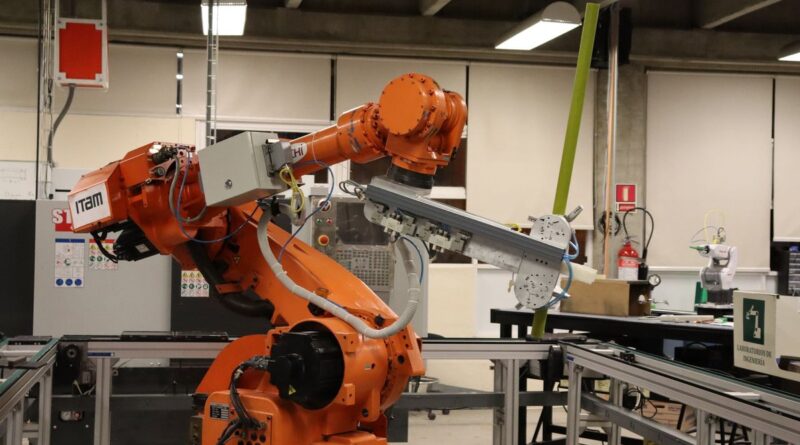
Georgia Tech, Emory Forge Medical Robotics Dual-Degree Program

Hostinger Cloud Hosting: Ultra-Fast NVMe Storage & 99.9% Uptime Guarantee
Power your high-traffic WordPress websites with managed cloud infrastructure, automated daily backups, free SSL, and 24/7 expert support.
📌 Key Takeaways
- Georgia Tech and Emory University have launched a dual-degree program combining Medicine and Robotics.
- The initiative addresses the growing need for professionals skilled in both advanced medical practice and robotic technology.
- This collaboration aims to bridge the gap between technological innovation and clinical care, enhancing future healthcare solutions.
- The program is poised to create a specialized workforce crucial for the ethical development and deployment of medical robotics.
Georgia Tech, Emory Forge Medical Robotics Dual-Degree Program
October 09, 2026 – In a strategic move poised to redefine the future of healthcare, Georgia Institute of Technology and Emory University have officially partnered to launch a groundbreaking dual-degree program in Medicine and Robotics. This initiative aims to cultivate a new generation of professionals uniquely equipped to navigate the complex intersection of advanced robotic technology and clinical practice, addressing a critical demand within the rapidly evolving medical landscape.
The collaboration brings together Georgia Tech’s renowned expertise in engineering and robotics with Emory’s distinguished medical education and clinical research capabilities. Situated in Atlanta, this innovative program is designed to produce practitioners and researchers who possess both deep medical knowledge and sophisticated understanding of robotic systems, from surgical assistants to AI-powered diagnostic tools. The program’s inception marks a significant step towards bridging the traditional divide between technological innovation and patient care, a convergence increasingly vital as healthcare systems worldwide grapple with efficiency, precision, and accessibility challenges.
Key Analysis: Bridging the Med-Tech Divide
The establishment of a dedicated dual-degree program in Medicine and Robotics by institutions of Georgia Tech and Emory’s caliber is more than an academic offering; it represents a strategic foresight into the future of global healthcare. Analysts suggest that the convergence of artificial intelligence, advanced robotics, and medical science is not merely incremental but transformational. The demand for professionals who can not only operate but also innovate and critically assess robotic applications in medicine is escalating. This program directly addresses a looming talent gap where medical professionals often lack deep technical understanding and engineers may lack clinical context.
Industry observers note that such interdisciplinary programs are crucial for accelerating the development and ethical deployment of medical robotics. From minimally invasive surgery and rehabilitation assistance to automated drug delivery and intelligent prosthetics, the applications are vast. However, successful integration requires practitioners who understand patient physiology, ethical implications, regulatory pathways, and the practical challenges of clinical environments, alongside their technical prowess. This dual-degree structure is designed to foster precisely this holistic understanding, ensuring that technological advancements are not just ingenious but also safe, effective, and patient-centric.
Why This Matters in the Long Run
The long-term implications of programs like the Georgia Tech-Emory dual-degree extend far beyond academic accolades. It signifies a fundamental shift in how future medical innovation will be conceived and implemented. As healthcare becomes increasingly digitized and automated, the quality of patient outcomes will depend heavily on the specialized workforce capable of leveraging these tools responsibly. This initiative contributes to building a robust pipeline of experts who can drive research into next-generation medical devices, refine surgical procedures with robotic precision, and develop AI-driven diagnostic platforms. Furthermore, it sets a precedent for other leading institutions to follow, potentially catalyzing a global trend towards more integrated, interdisciplinary education models that anticipate and shape the technological future of critical sectors like healthcare, ensuring ethical considerations are baked into the core curriculum.
The Future of Healthcare Talent
As of October 2026, the global market for medical robotics continues its robust expansion, driven by an aging population, increasing chronic disease prevalence, and the persistent pursuit of enhanced surgical precision and patient recovery times. The graduates of programs like this will be uniquely positioned to lead in this high-growth sector, influencing everything from hospital operational efficiencies to the design of personalized medical interventions. Their dual expertise will be invaluable in ensuring that the rapid advancements in robotics are translated into tangible, beneficial impacts for patients worldwide, navigating the complex ethical, regulatory, and practical challenges inherent in integrating cutting-edge technology into human health.
📌 Key Questions Answered
What is the new dual-degree program offered by Georgia Tech and Emory?
Georgia Institute of Technology and Emory University have partnered to launch a dual-degree program in Medicine and Robotics.
What is the primary goal of this interdisciplinary program?
The program aims to cultivate professionals uniquely equipped to navigate the complex intersection of advanced robotic technology and clinical practice, addressing critical demands in the evolving medical landscape.
Which institutions are collaborating on this initiative?
The program is a collaboration between Georgia Institute of Technology, known for engineering and robotics, and Emory University, recognized for medical education and clinical research.
📚 Story Sources:
- Georgia Tech, Emory Partner on Medicine and Robotics Dual-Degree Program – Georgia Institute of Technology (news.google.com)
This article was synthesized by AI from the multiple sources above for educational and informational purposes.
Image Credit: Photo by Diego Martinez on Pexels