
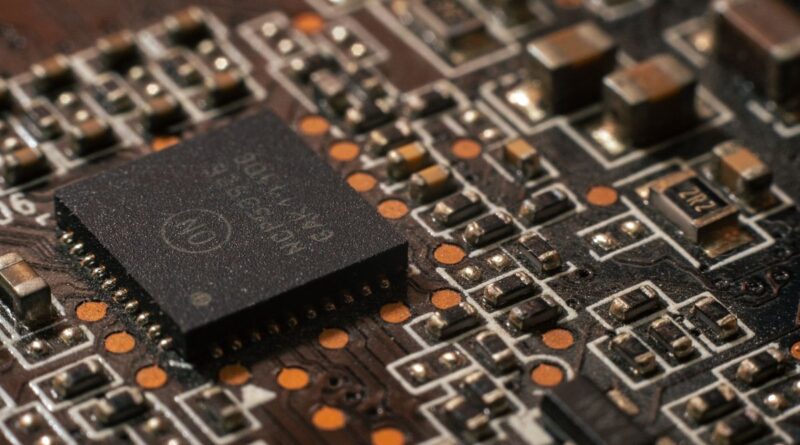
Hygon’s Physical AI Chips: A 2026 Retrospective on Industrial Automation

Hostinger Cloud Hosting: Ultra-Fast NVMe Storage & 99.9% Uptime Guarantee
Power your high-traffic WordPress websites with managed cloud infrastructure, automated daily backups, free SSL, and 24/7 expert support.
📌 Key Takeaways
- Chinese chipmaker Hygon expanded into 'physical AI' with new chips for robots and factories, announced in late 2025.
- This strategic move signifies a pivot towards edge computing for industrial automation, enhancing real-time decision-making in manufacturing.
- By September 2026, these specialized chips are driving increased efficiency, reduced costs, and new modes of production.
- Hygon's initiative contributes to China's ambition for self-sufficiency in critical semiconductor technology and impacts the geopolitics of industrial AI.
Previously: Hygon’s Strategic Leap: Powering China’s Physical AI Future in 2026
Hygon’s Physical AI Chips: A 2026 Retrospective on Industrial Automation
The strategic expansion of Chinese chipmaker Hygon into “physical AI” with specialized chips for robotics and industrial automation, an announcement made in late 2025, marks a critical juncture in the global AI landscape, shifting focus from traditional data centers to real-world, edge-based applications.
In what analysts now view as a prescient move from late 2025, Chinese chipmaker Hygon unveiled a new line of processors explicitly designed for edge computing within industrial robots and smart factory environments. This development, as reported by scmp.com, signaled a significant expansion beyond Hygon’s previous focus on server and data center AI, underscoring China’s broader ambition to achieve self-sufficiency and leadership in advanced semiconductor technology, particularly in critical industrial sectors.
Key Analysis: Accelerating Industrial Automation
The pivot to “physical AI” is paramount for the next generation of automation. Unlike cloud-based AI, which relies on remote processing, physical AI demands low latency, high energy efficiency, and robust processing capabilities directly at the point of action—whether it’s a robotic arm on an assembly line or an autonomous guided vehicle (AGV) navigating a warehouse. Hygon’s entry into this segment positions it to capture a rapidly growing market, driven by the global imperative for enhanced manufacturing efficiency and resilience.
By September 2026, the impact of such specialized AI chips is becoming increasingly evident across manufacturing sectors worldwide. These processors enable more sophisticated, real-time decision-making for robots, significantly enhancing precision, speed, and adaptability on factory floors. This translates directly to improved operational efficiency, reduced waste, and the potential for entirely new modes of production, such as highly flexible, reconfigurable manufacturing lines capable of rapid product customization.
The emphasis on physical AI also signifies a maturation of AI beyond purely software-driven applications. It necessitates a deep integration of hardware and software, where chips are optimized for specific sensor inputs, motor control, and rapid inferencing required for physical interaction with the environment. This represents a significant engineering challenge and a lucrative opportunity for companies capable of delivering integrated, purpose-built solutions. Institutions like the China Academy of Sciences have consistently highlighted the strategic importance of developing domestic capabilities in this domain to secure national industrial infrastructure against geopolitical supply chain disruptions.
Why This Matters in the Long Run: The Geopolitics of Industrial AI
Hygon’s expansion into physical AI chips is a microcosm of a larger, ongoing trend: the increasing nationalization and strategic prioritization of critical technology supply chains. As industrial automation becomes foundational to economic competitiveness, national productivity, and even security, control over the underlying AI hardware becomes paramount. This move directly contributes to China’s stated goals of reducing reliance on foreign-made components for its burgeoning robotics and smart manufacturing industries, as outlined in initiatives like “Made in China 2025.”
The long-term implications involve a potential bifurcation of industrial AI ecosystems, with different regional standards and hardware preferences emerging. This could impact global trade flows, technological collaboration, and the interoperability of advanced manufacturing systems, fostering a more fragmented yet resilient global industrial landscape.
Hygon’s strategic pivot into physical AI chips underscores the evolving demands of intelligent automation and highlights the ongoing geopolitical competition for technological supremacy in the critical domain of industrial AI, shaping the future of global manufacturing.
📌 Key Questions Answered
What is 'physical AI'?
Physical AI refers to artificial intelligence applications that operate directly within the physical world, often requiring specialized hardware like chips for real-time processing in devices such as robots and factory machinery.
Which company is expanding into physical AI chips?
Chinese chipmaker Hygon is expanding its focus into physical AI with new chips designed specifically for robots and smart factories.
What is the significance of Hygon's move into physical AI?
Hygon's expansion is significant because it marks a shift from traditional data center AI towards edge computing for real-world industrial applications, contributing to China's technological independence and advancing global automation.
📚 Story Sources:
- China’s Hygon expands into physical AI with new chips for robots and factories – scmp.com (news.google.com)
This article was synthesized by AI from the multiple sources above for educational and informational purposes.
Image Credit: Photo by Ivan Chumak on Pexels