
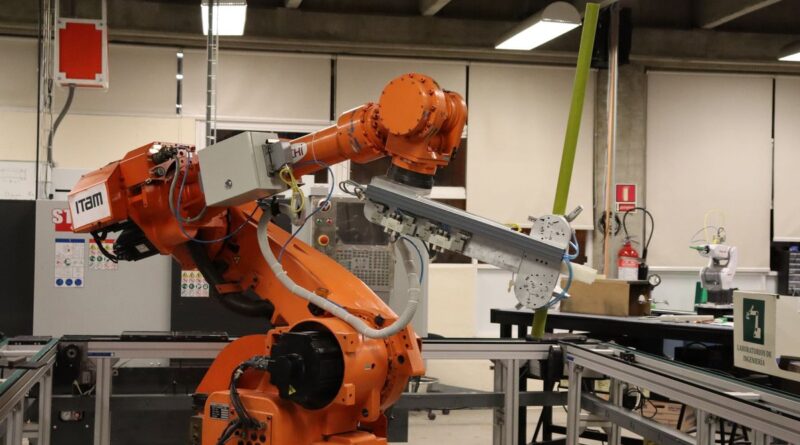
Dual-Degree Pathway Forges Future of Medical Robotics

Hostinger Cloud Hosting: Ultra-Fast NVMe Storage & 99.9% Uptime Guarantee
Power your high-traffic WordPress websites with managed cloud infrastructure, automated daily backups, free SSL, and 24/7 expert support.
📌 Key Takeaways
- Emory and Georgia Tech established a dual-degree pathway integrating medicine and robotics, a visionary program now impacting healthcare technology.
- The collaboration leverages Emory's clinical expertise with Georgia Tech's robotics prowess to address the growing demand for interdisciplinary professionals.
- Graduates are prepared for critical roles in robotic surgery, intelligent prosthetics, and advanced diagnostics, driving innovation in healthcare.
- This initiative serves as a model for future interdisciplinary education, crucial for the ethical deployment and societal acceptance of advanced medical technologies.
Dual-Degree Pathway Forges Future of Medical Robotics
In a foresightful move that continues to resonate across the healthcare technology landscape, Emory University and the Georgia Institute of Technology jointly established a dual-degree pathway designed to bridge the rapidly converging fields of medicine and robotics. Announced in previous years, this innovative program, which by October 2026 has begun to matriculate its first cohorts, was a strategic response to the escalating demand for professionals capable of navigating the complex intersection of patient care and advanced robotic systems.
The collaboration leverages Emory’s deep expertise in clinical medicine and healthcare delivery alongside Georgia Tech’s world-renowned prowess in robotics engineering and artificial intelligence. This synergistic approach aims to cultivate a new generation of healthcare innovators equipped not only with medical knowledge but also the technical acumen to design, implement, and optimize robotic solutions within clinical settings. The program’s inception underscored a growing recognition that future medical breakthroughs would increasingly rely on interdisciplinary specialists.
Key Analysis: Integrating Minds for Future Health
The establishment of this dual-degree pathway by Emory and Georgia Tech represents a critical paradigm shift in higher education, moving beyond traditional siloed disciplines. As industry observers note, the global market for medical robotics — encompassing surgical robots, exoskeletons, prosthetic limbs, and diagnostic aids — has expanded significantly in recent years. This growth is fueled by an aging global population, the push for minimally invasive procedures, and the continuous evolution of AI and machine learning capabilities that enhance robotic precision and autonomy.
Experts from institutions like MIT and Stanford have long advocated for such integrated curricula, emphasizing that the ethical deployment and societal acceptance of advanced medical robotics depend heavily on practitioners who understand both the technological capabilities and the profound human implications. This program directly addresses the talent gap, preparing graduates for roles in robotic surgery, intelligent prosthetics development, automated drug delivery systems, and advanced diagnostic imaging. The focus extends beyond technical skills to include crucial aspects of patient safety, regulatory compliance, and the human-robot interaction within sensitive medical environments.
Why This Matters in the Long Run
The Emory-Georgia Tech pathway is more than just an academic offering; it’s a blueprint for the future of specialized education in an increasingly interconnected world. By proactively training professionals at the nexus of medicine and robotics, the program is poised to accelerate innovation in healthcare, leading to more efficient treatments, improved patient outcomes, and potentially, a fundamental reshaping of how medical services are delivered. Its long-term impact will likely be seen in the development of safer, more intuitive robotic systems, and a workforce better prepared to integrate these technologies ethically and effectively. This model could inspire similar interdisciplinary programs globally, setting a benchmark for preparing future generations for careers that transcend conventional professional boundaries.
Conclusion
The dual-degree pathway from Emory and Georgia Tech stands as a testament to the power of interdisciplinary collaboration, proving instrumental in developing the specialized talent required to steer the ongoing revolution in medical robotics and redefine the future of healthcare.
📌 Key Questions Answered
What is the core purpose of the Emory and Georgia Tech dual-degree pathway?
The pathway is designed to bridge the fields of medicine and robotics, training professionals who can integrate advanced robotic systems into clinical healthcare settings.
Which institutions are involved in this dual-degree program?
Emory University, known for its clinical medicine expertise, and the Georgia Institute of Technology, renowned for robotics engineering, are the collaborating institutions.
What kind of expertise do graduates of this program acquire?
Graduates are equipped with both medical knowledge and technical skills in robotics, preparing them for roles in areas like robotic surgery, intelligent prosthetics, and automated drug delivery.
📚 Story Sources:
- New Emory and Georgia Tech Dual-Degree Pathway Bridges Medicine and Robotics | Newswise – Newswise (news.google.com)
Newswise reported on the initial announcement of the dual-degree pathway, highlighting the collaboration between Emory and Georgia Tech to bridge medicine and robotics.
This article was synthesized by AI from the multiple sources above for educational and informational purposes.
Image Credit: Photo by Diego Martinez on Pexels
Pingback: Bridging the Gap: Emory & Georgia Tech's Dual-Degree in Med-Robotics - The Pivot News