
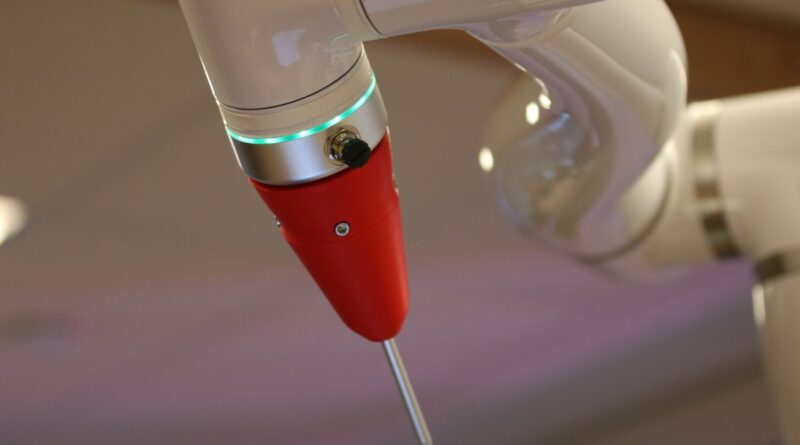
Bridging the Gap: Emory & Georgia Tech’s Dual-Degree in Med-Robotics

Hostinger Cloud Hosting: Ultra-Fast NVMe Storage & 99.9% Uptime Guarantee
Power your high-traffic WordPress websites with managed cloud infrastructure, automated daily backups, free SSL, and 24/7 expert support.
📌 Key Takeaways
- The Emory University and Georgia Institute of Technology dual-degree pathway in medicine and robotics was established to merge two critical fields.
- This interdisciplinary program addresses the growing need for professionals proficient in both advanced medical practice and robotic engineering.
- It aims to accelerate the development of next-generation healthcare technologies, including surgical robots and diagnostic tools.
- The initiative serves as a model for future educational programs seeking to cultivate specialized talent for complex, integrated challenges.
Revolutionizing Healthcare: The Blended Future of Medicine and Robotics Takes Hold
October 02, 2026 — In a foresightful move that continues to shape the future of healthcare technology, the dual-degree pathway established by Emory University and the Georgia Institute of Technology, bridging medicine and robotics, has solidified its position as a critical initiative. Announced in previous years, this program was designed to cultivate a new generation of professionals capable of navigating the complex intersection of advanced medical practice and cutting-edge robotic engineering.
At its core, this collaborative endeavor between two of the United States’ premier institutions aimed to address a burgeoning need: clinicians with a profound understanding of robotic systems, and engineers with an intimate grasp of medical complexities. This synergistic approach was recognized early on as essential for the development and deployment of next-generation surgical robots, diagnostic tools, and assistive technologies that are not only technologically sophisticated but also clinically effective and ethically sound.
Key Analysis: The Strategic Imperative of Interdisciplinary Education
The establishment of this dual-degree pathway by Emory and Georgia Tech represents a proactive response to the accelerating pace of innovation in both medical science and robotics. By 2026, the applications of robotics in healthcare have expanded dramatically, from minimally invasive surgery and rehabilitation to personalized drug delivery and elder care. However, the true potential of these technologies can only be unlocked by professionals who are fluent in both domains.
Analysts suggest that such interdisciplinary programs are vital for fostering innovation. Traditional silos between medical and engineering disciplines often lead to solutions that are either clinically impractical or technologically underutilized. This dual-degree structure, therefore, is not merely a combination of two fields but a deliberate fusion intended to create a new, hybrid expertise. Graduates from such pathways are uniquely positioned to translate complex medical challenges into engineering problems and vice-versa, accelerating the development cycle for medical robotics and ensuring that technological advancements are directly aligned with patient needs and clinical workflows.
Why This Matters in the Long Run: A Blueprint for Future Innovation
The Emory and Georgia Tech dual-degree pathway serves as a critical blueprint for future educational models worldwide. As technology continues to integrate deeply into every aspect of life, the demand for professionals with blended skill sets will only intensify. This program’s success demonstrates that by breaking down traditional academic barriers, universities can cultivate the specialized talent required to tackle humanity’s most pressing challenges, particularly in healthcare.
In the long run, this initiative contributes to a more robust ecosystem for medical innovation, fostering ethical considerations alongside technological prowess. It ensures that the advancements in medical robotics are guided by a deep understanding of patient safety, clinical efficacy, and societal impact, rather than solely by engineering feasibility. This model of interdisciplinary education is set to become a benchmark for institutions aiming to prepare students for a future where complex problems demand integrated solutions.
The collaboration between Emory and Georgia Tech exemplifies the strategic importance of merging diverse academic strengths to address real-world demands. As of October 2026, this program continues to be a cornerstone in the ongoing evolution of healthcare technology, promising a future where medicine and robotics are not just adjacent fields, but intrinsically intertwined.
📌 Key Questions Answered
What is the core purpose of the Emory and Georgia Tech dual-degree pathway?
The pathway aims to bridge medicine and robotics, cultivating professionals who understand both advanced medical practice and cutting-edge robotic engineering to drive innovation in healthcare technology.
Which institutions are involved in this dual-degree program?
The program is a collaborative effort between Emory University and the Georgia Institute of Technology.
What kind of professionals does this program aim to produce?
It seeks to produce clinicians with a deep understanding of robotic systems and engineers with an intimate grasp of medical complexities, fostering a new hybrid expertise.
📚 Story Sources:
- New Emory and Georgia Tech Dual-Degree Pathway Bridges Medicine and Robotics | Newswise – Newswise (news.google.com)
Newswise reported on the establishment of a dual-degree pathway by Emory and Georgia Tech, focusing on its role in bridging medicine and robotics.
This article was synthesized by AI from the multiple sources above for educational and informational purposes.
Image Credit: Photo by Freek Wolsink on Pexels