
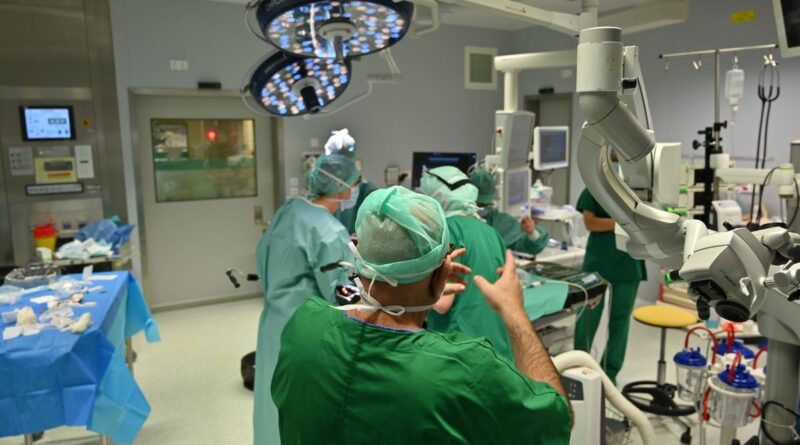
Medical Robotics: Georgia Tech, Emory Dual-Degree Impact 2026

Hostinger Cloud Hosting: Ultra-Fast NVMe Storage & 99.9% Uptime Guarantee
Power your high-traffic WordPress websites with managed cloud infrastructure, automated daily backups, free SSL, and 24/7 expert support.
📌 Key Takeaways
- Georgia Tech and Emory University partnered to create a dual-degree program in Medicine and Robotics, addressing a critical need for interdisciplinary professionals.
- The program aims to bridge the gap between technological innovation and clinical application, fostering graduates fluent in both advanced robotics and medical practice.
- This initiative is a model for future specialized education, designed to accelerate the development and adoption of robotic solutions in healthcare.
- Graduates are equipped to navigate the complex societal and ethical implications of AI-driven medical robotics, impacting diagnostics, surgery, and rehabilitation.
In a strategic move that continues to redefine the intersection of engineering and healthcare, the dual-degree program in Medicine and Robotics, jointly offered by the Georgia Institute of Technology and Emory University, stands as a pivotal initiative in shaping the future of medical technology. Established in recent years, this collaboration has become a benchmark for interdisciplinary education, addressing the critical need for professionals fluent in both advanced robotics and clinical practice.
The program, a partnership between Georgia Tech’s renowned engineering prowess and Emory’s esteemed medical faculty, was designed to cultivate a new generation of innovators capable of bridging the historical chasm between technological development and its practical application in patient care. By immersing students in both rigorous medical curricula and advanced robotics engineering, the initiative aims to accelerate the development and adoption of robotic solutions in diagnostics, surgery, rehabilitation, and patient monitoring.
Key Analysis: Bridging the Innovation Gap
The significance of programs like the Georgia Tech-Emory collaboration cannot be overstated. Traditionally, medical innovation has often been hampered by a lack of shared language and understanding between clinicians and engineers. Engineers might develop sophisticated robotic systems without a deep appreciation for the nuances of human physiology or surgical workflow, while medical professionals might struggle to articulate their technological needs in a way that engineers can readily translate into design specifications.
This dual-degree approach directly tackles this challenge. Graduates emerge not just as specialists in one domain, but as hybrid professionals capable of identifying unmet clinical needs and designing robotic interventions that are both technologically advanced and clinically relevant. Industry observers note that this integrated skillset is increasingly vital as medical robotics moves beyond assistive tools to more autonomous and AI-driven systems. The ethical implications of such advancements, including patient safety, data privacy, and the evolving role of human judgment, are also central to the curriculum, ensuring graduates are equipped to navigate the complex societal impact of their innovations.
Why This Matters in the Long Run
The Georgia Tech-Emory dual-degree program represents more than just an academic offering; it is a blueprint for the future of specialized professional education. As of 2026, the demand for professionals at the nexus of technology and biology continues to surge, driven by breakthroughs in AI, advanced materials, and personalized medicine. This program is a leading example of how universities can proactively address emerging industry needs by breaking down traditional departmental silos. Its success is likely to inspire similar interdisciplinary initiatives across the globe, fostering a workforce uniquely prepared to tackle the complex challenges and opportunities presented by the Fourth Industrial Revolution in healthcare. The long-term impact will be seen in faster clinical translation of robotic technologies, improved patient outcomes, and the establishment of new paradigms in healthcare delivery.
Ultimately, the convergence of medicine and robotics through dedicated educational pathways is not merely an academic exercise but a strategic imperative, promising to revolutionize healthcare delivery for decades to come.
📌 Key Questions Answered
What is the core purpose of the Georgia Tech-Emory dual-degree program?
The program aims to bridge the gap between advanced robotics engineering and clinical medical practice by training professionals with expertise in both fields to drive innovation in healthcare.
Which institutions are collaborating on this dual-degree program?
The program is a joint initiative between the Georgia Institute of Technology, known for its engineering, and Emory University, recognized for its medical faculty.
What kind of impact is this program expected to have on healthcare?
It is expected to accelerate the development and adoption of robotic solutions in diagnostics, surgery, rehabilitation, and patient monitoring, leading to improved patient outcomes and new paradigms in healthcare delivery.
📚 Story Sources:
- Georgia Tech, Emory Partner on Medicine and Robotics Dual-Degree Program – Georgia Institute of Technology (news.google.com)
This source announced the partnership and the establishment of the dual-degree program, highlighting the collaboration between the two institutions.
This article was synthesized by AI from the multiple sources above for educational and informational purposes.
Image Credit: Photo by Stéf -b. on Pexels
Pingback: Georgia Tech, Emory Partnership Two Years On: The Future of Medical Robotics Takes Shape - The Pivot News