
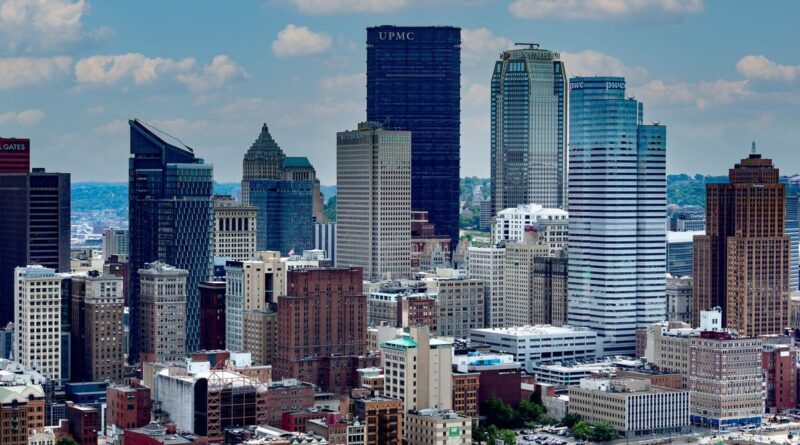
Pittsburgh’s Vision: The 30-Year Tech Roadmap Unfolding by 2026

Hostinger Cloud Hosting: Ultra-Fast NVMe Storage & 99.9% Uptime Guarantee
Power your high-traffic WordPress websites with managed cloud infrastructure, automated daily backups, free SSL, and 24/7 expert support.
📌 Key Takeaways
- Pittsburgh has successfully transitioned from an industrial 'rust belt' city to a significant tech innovation hub by late 2026.
- The city's transformation was guided by a proactive 30-year tech roadmap, initially articulated around 2024, focusing on AI, robotics, and healthcare innovation.
- World-class academic institutions like Carnegie Mellon University and the University of Pittsburgh are foundational to Pittsburgh's sustained tech growth and research.
- Pittsburgh's model emphasizes collaborative environments between academia and industry, fostering ethical AI development and autonomous systems.
Pittsburgh’s Vision: The 30-Year Tech Roadmap Unfolding by 2026
As of late 2026, Pittsburgh continues to solidify its position as a burgeoning innovation hub, demonstrating significant progress on the ambitious 30-year tech roadmap outlined by its leaders just a few years prior.
A 2024 report by Technical.ly underscored a pivotal moment for Pittsburgh: shedding its legacy as a ‘rust belt’ city to embrace a future driven by technology. The article detailed how civic and industry leaders were then charting a course for the city’s technological evolution, projecting advancements three decades into the future, particularly in areas like robotics, artificial intelligence, and healthcare innovation. This forward-thinking approach, articulated in the mid-2020s, laid the groundwork for the sustained growth now observable in the region.
Analysis: A Vision Manifesting in Robotics and AI
The vision articulated in the Technical.ly report has demonstrably begun to manifest. Pittsburgh’s strategic advantage, rooted in world-class academic institutions like Carnegie Mellon University (CMU) and the University of Pittsburgh, has been a consistent engine for this transformation. These institutions, long recognized for their pioneering work in AI and robotics, have continued to attract significant research funding and foster a vibrant startup ecosystem. Industry observers note that the city’s collaborative environment, bridging academia and enterprise, has been crucial in translating theoretical breakthroughs into practical applications. This synergy has positioned Pittsburgh as a critical center for ethical AI development and autonomous systems, areas where global market demand continues to surge. The city’s commitment to fostering a diverse tech workforce, a key component of the original 30-year outlook, has also seen concerted efforts, aiming to ensure equitable participation in the burgeoning tech economy.
Key Analysis: The ‘Why’ Behind Pittsburgh’s Resilience
The "why" behind Pittsburgh’s enduring success in this transition lies in its deliberate cultivation of niche yet globally impactful tech sectors. Unlike some cities that chase broad tech trends, Pittsburgh has focused on areas where its academic strengths provide an undeniable competitive edge. The societal impact is evident in the revitalization of urban areas and the creation of high-skill jobs, though challenges remain in ensuring these benefits reach all communities, as noted by urban development analysts. Globally, Pittsburgh’s model is increasingly cited as a blueprint for post-industrial cities seeking sustainable economic transformation, highlighting the importance of long-term vision coupled with foundational research capabilities.
Why This Matters in the Long Run
Pittsburgh’s journey offers a compelling case study for urban resilience and strategic economic diversification. The initial "30 years ahead" outlook, though a snapshot from a few years ago, provided a critical framework that continues to guide investments in infrastructure, talent development, and research. As global competition for tech talent and innovation intensifies, Pittsburgh’s sustained commitment to its identified future tech pillars—particularly in AI, robotics, and advanced manufacturing—positions it to remain a significant contributor to the global innovation landscape for decades to come, potentially shaping the next generation of industrial automation and intelligent systems.
Pittsburgh’s ongoing evolution from industrial powerhouse to innovation leader, driven by a clear, long-term technological vision, sets a precedent for urban transformation in the 21st century.
📌 Key Questions Answered
What was Pittsburgh's primary goal outlined in its tech vision?
Pittsburgh aimed to shed its 'rust belt' reputation and establish itself as a leading tech innovation hub, with a forward-looking plan spanning 30 years, as highlighted in a 2024 report.
Which technological sectors were central to Pittsburgh's long-term strategy?
The strategy focused heavily on robotics, artificial intelligence, and healthcare innovation, leveraging the city's strong academic foundations.
What role did academic institutions play in Pittsburgh's tech transformation?
Institutions like Carnegie Mellon University and the University of Pittsburgh were crucial, acting as engines for research, talent development, and fostering the local startup ecosystem.
📚 Story Sources:
- Pittsburgh left its ‘rust’ reputation behind. Now its tech leaders are looking 30 years ahead. – Technical.ly (news.google.com)
This article was synthesized by AI from the multiple sources above for educational and informational purposes.
Image Credit: Photo by LaMont L. Johnson on Pexels
Pingback: Pittsburgh's 30-Year Tech Vision: A Blueprint for Urban Reinvention in 2026 - The Pivot News