
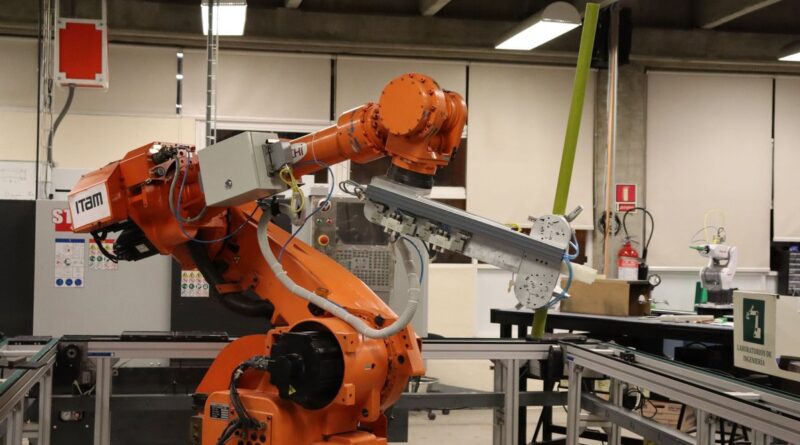
Georgia Tech, Emory Forge Med-Robotics Dual Degree

Hostinger Cloud Hosting: Ultra-Fast NVMe Storage & 99.9% Uptime Guarantee
Power your high-traffic WordPress websites with managed cloud infrastructure, automated daily backups, free SSL, and 24/7 expert support.
📌 Key Takeaways
- Georgia Tech and Emory University partnered on a dual-degree program in medicine and robotics, addressing a critical skills gap in healthcare.
- The program integrates engineering expertise with medical knowledge to train professionals for fields like robotic surgery and intelligent prosthetics.
- By 2026, such interdisciplinary programs are recognized as crucial for driving innovation and meeting the rising demand for hybrid talent in healthcare technology.
- This initiative set a precedent for specialized education, contributing to more efficient, precise, and accessible healthcare solutions globally.
Georgia Tech, Emory Forge Med-Robotics Dual Degree: A 2026 Retrospective
The convergence of advanced robotics and medical science, once a speculative future, has become a tangible reality by October 2026. A pivotal moment in this evolution was the establishment of a dual-degree program in medicine and robotics by the Georgia Institute of Technology and Emory University, an initiative that, in hindsight, addressed a critical impending skills gap in healthcare.
This forward-thinking partnership, announced prior to 2026, brought together Georgia Tech’s renowned engineering prowess and Emory’s distinguished medical expertise. The program was designed to cultivate a new generation of professionals uniquely equipped to navigate the complex landscape where artificial intelligence, automation, and human physiology intersect. Its inception marked a significant step in formalizing the interdisciplinary training necessary for the burgeoning field of robotic surgery, intelligent prosthetics, automated diagnostics, and personalized medicine.
Key Insights: Bridging Disciplines for Future Healthcare
The strategic alliance between Georgia Tech and Emory University underscored a growing recognition of robotics’ transformative potential in healthcare. By offering a dual-degree, the institutions aimed to produce graduates who possess not only deep medical knowledge but also the engineering acumen to design, implement, and optimize robotic systems within clinical settings. This approach directly contrasted with traditional silos, where medical professionals often lacked technical design understanding and engineers sometimes missed critical clinical nuances.
Industry observers note that programs like this were instrumental in accelerating the adoption of robotic-assisted procedures and fostering innovation in medical device development. The integration of robotics has, by 2026, led to less invasive surgeries, enhanced diagnostic precision, and improved rehabilitation outcomes. Such specialized training pathways are now seen as essential for maintaining a competitive edge in global healthcare innovation, as reported by various tech and medical journals.
Expert Insights: The Demand for Hybrid Talent
Analysts suggest that the demand for professionals with hybrid skill sets in medicine and robotics has surged dramatically in the mid-2020s. The ethical implications surrounding autonomous medical systems, data privacy in robotic diagnostics, and the human-machine interface in patient care have also become central to these interdisciplinary curricula. Universities worldwide have since looked to models like the Georgia Tech-Emory program to inform their own strategies for preparing students for a healthcare landscape increasingly shaped by advanced technology.
Why This Matters in the Long Run
The Georgia Tech-Emory dual-degree program represents more than just an academic offering; it is a foundational investment in the future of healthcare. By proactively addressing the need for specialized, interdisciplinary talent, it has helped set a precedent for how institutions can foster innovation at the intersection of complex fields. Its long-term impact lies in shaping the workforce that will drive breakthroughs in medical robotics, ultimately leading to more efficient, precise, and accessible healthcare solutions globally for decades to come.
As robotic technologies continue to mature and integrate deeper into daily medical practice, the foresight demonstrated by this partnership becomes increasingly evident, highlighting the critical role of specialized education in advancing human well-being.
📌 Key Questions Answered
What institutions partnered for this dual-degree program?
The Georgia Institute of Technology and Emory University partnered to create this dual-degree program in medicine and robotics.
What is the primary goal of the medicine and robotics dual-degree program?
The program aims to cultivate professionals uniquely equipped to navigate the complex landscape where artificial intelligence, automation, and human physiology intersect, addressing a critical skills gap in healthcare.
What fields does the dual-degree program address?
The program addresses fields such as robotic surgery, intelligent prosthetics, automated diagnostics, and personalized medicine by combining deep medical knowledge with engineering acumen.
📚 Story Sources:
- Georgia Tech, Emory Partner on Medicine and Robotics Dual-Degree Program – Georgia Institute of Technology (news.google.com)
This source reported on the initial announcement of the partnership between Georgia Tech and Emory for their dual-degree program in medicine and robotics.
This article was synthesized by AI from the multiple sources above for educational and informational purposes.
Image Credit: Photo by Diego Martinez on Pexels
Pingback: Dual-Degree Revolution: Medicine and Robotics Converge at Georgia Tech, Emory - The Pivot News