
AI, Drones, Robotics: Reshaping Critical Operations in 2026

Hostinger Cloud Hosting: Ultra-Fast NVMe Storage & 99.9% Uptime Guarantee
Power your high-traffic WordPress websites with managed cloud infrastructure, automated daily backups, free SSL, and 24/7 expert support.
📌 Key Takeaways
- AI, drones, and robotics have fundamentally redefined operational capabilities across critical sectors by October 2026, enhancing both efficiency and human safety.
- AI's analytical power, including predictive analytics and real-time data interpretation, is central to optimizing resource allocation and decision-making in complex scenarios.
- Drones serve as versatile operational assets for rapid reconnaissance, supply delivery, and remote inspections, extending human reach into dangerous or inaccessible areas.
- Robotics perform precision tasks in hazardous environments, minimizing human exposure to risk and complementing the aerial and analytical capabilities of drones and AI.
The convergence of artificial intelligence (AI), advanced robotics, and unmanned aerial vehicles (UAVs), commonly known as drones, has fundamentally transformed operational capabilities across numerous sectors by October 2026. This technological synergy, which began to significantly redefine what’s possible years prior, particularly within critical public safety and emergency response domains, continues its rapid evolution.
Reports from as early as 2024, as highlighted by industry observers like FireRescue1, indicated a clear trajectory towards the deep integration of these technologies. What was once considered experimental is now standard practice, with AI providing the analytical backbone, drones offering unparalleled aerial perspective and rapid deployment, and robotics executing precision tasks in hazardous environments. This shift has not only enhanced efficiency but, more critically, significantly improved safety for human personnel.
The Analytical Edge of Artificial Intelligence
AI’s role in this transformative wave is primarily rooted in its capacity for advanced data processing and predictive analytics. In sectors ranging from disaster management to infrastructure inspection, AI algorithms now analyze vast datasets—including real-time sensor feeds, historical incident patterns, and environmental conditions—to provide actionable insights. For instance, in emergency response, AI-driven systems predict potential hazard zones, optimize resource allocation, and even interpret complex visual data from drone feeds to identify victims or structural weaknesses. This predictive capability minimizes response times and maximizes the effectiveness of interventions, a critical factor in saving lives and mitigating damage.
Drones: Extending the Human Reach
Drones have evolved from simple surveillance tools into versatile operational assets. By 2026, their applications span beyond aerial reconnaissance to include autonomous delivery of essential supplies, remote inspection of compromised structures, and even direct intervention in situations too dangerous for humans. Equipped with thermal cameras, chemical sensors, and high-resolution imaging, modern UAVs provide comprehensive situational awareness. Their ability to rapidly deploy over vast or inaccessible terrains, as noted by leading research institutions studying disaster preparedness, has made them indispensable for initial assessments and ongoing monitoring during crises.
Robotics: Precision and Safety in Hazardous Zones
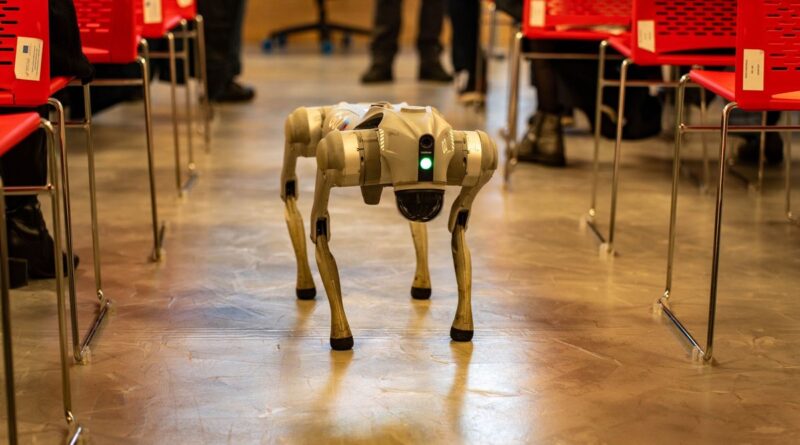
Ground-based robotics complements AI and drones by performing tasks that require physical interaction in high-risk environments. From navigating collapsed buildings to defusing explosive devices or handling hazardous materials, these robotic platforms reduce human exposure to danger. Advances in machine learning have endowed these robots with enhanced autonomy, allowing them to adapt to unpredictable conditions and execute complex maneuvers with precision. The continuous development in robotic manipulation and locomotion, often spearheaded by institutions like MIT and Stanford, ensures their increasing capability to operate effectively in diverse and challenging real-world scenarios.
Why This Matters in the Long Run
The profound integration of AI, drones, and robotics signifies a fundamental paradigm shift towards more resilient and responsive societal infrastructure. In the long term, this trend points towards increasingly autonomous systems capable of maintaining public safety and critical services with minimal human intervention in routine or high-risk scenarios. It fosters the development of ‘smart’ cities where interconnected AI-driven systems can anticipate and react to incidents, from traffic management during evacuations to automated inspection of aging infrastructure. This evolution demands a re-evaluation of human roles, emphasizing oversight, ethical programming, and advanced technical skills, while simultaneously opening new avenues for innovation and economic growth in the autonomous systems industry. The ethical frameworks governing autonomous decision-making and data privacy remain a critical area of ongoing development and global discourse.
As these technologies continue to mature and integrate further, their collective impact will only deepen, promising an era of unprecedented operational efficiency and safety across global industries.
📌 Key Questions Answered
How have AI, drones, and robotics redefined operational capabilities by 2026?
These technologies have fundamentally transformed operations by providing advanced analytical insights, unparalleled aerial perspectives, rapid deployment capabilities, and precision task execution in hazardous environments, significantly enhancing efficiency and safety.
What is AI's primary contribution to this technological synergy?
AI primarily contributes through its capacity for advanced data processing and predictive analytics, allowing for optimized resource allocation, hazard prediction, and real-time data interpretation from various sources, including drone feeds.
How do drones and robotics complement AI in critical operations?
Drones extend human reach with rapid aerial reconnaissance, supply delivery, and remote inspections, while robotics perform precise, dangerous physical tasks in high-risk zones, reducing human exposure to harm.
📚 Story Sources:
- Artificial intelligence, drones and robotics are redefining what’s possible – FireRescue1 (news.google.com)
This article was synthesized by AI from the multiple sources above for educational and informational purposes.
Image Credit: Photo by Vladimir Srajber on Pexels